
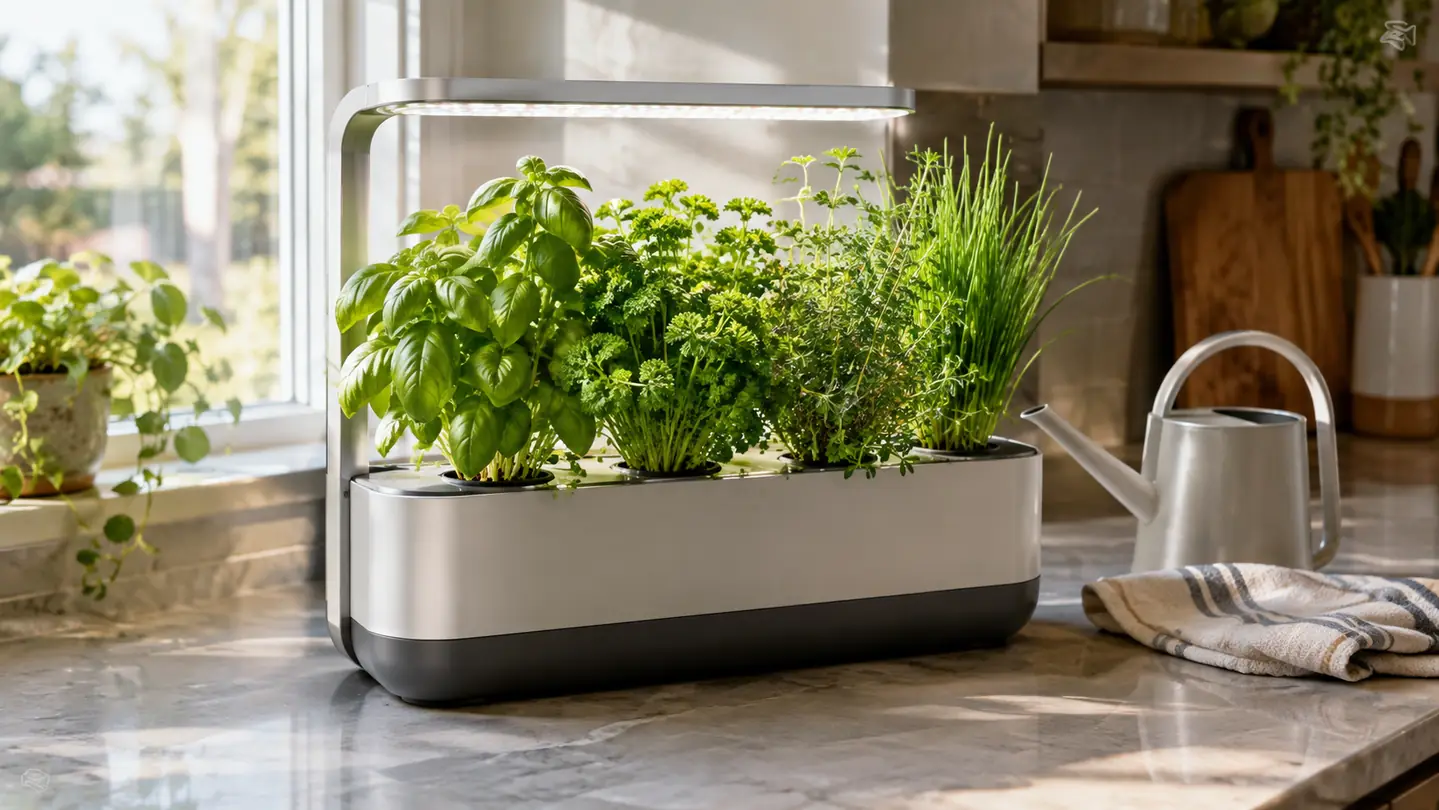
About four years ago, a bad back made it hard to bend over the raised beds I had kept for years, so I moved my growing indoors. I am not a gardener by training. I spent my working life turning wrenches on heating and cooling systems, and I treat growing the same way I treated a job: measure, write it down, fix what breaks. I started with a couple of cheap shop lights on a shelf in a spare bedroom upstairs, and I kept a paper log from day one, writing down every seed I planted and what it did. Last fall, Linda and I decided to try a real unit, so I ordered an AeroGarden Harvest Elite and ran it through a full cycle of herbs and lettuce, then a second cycle after that. This is what the Harvest Elite looks like after months of daily use, when the newness has worn off and you just want it to work.
The Quick Verdict
A solid, dependable countertop garden that grows real food with almost no fuss. The light and pump do their job, the pods sprout fast, and my only real complaints are the small water tank and how fast I go through replacement seed kits. If you want fresh herbs in January, it earns its spot on the counter.
Amazon Check Today's Price →Linda stopped buying grocery-store basil after the first harvest.
The Harvest Elite is the countertop garden I keep recommending to friends who think they cannot grow anything. Six pods, a light arm, and a pump that handles the watering. Check today's price on Amazon and see if it fits your kitchen.
Amazon Check Today's Price on Amazon →How I've Used It
The AeroGarden sits on a table in the spare bedroom upstairs for most of the year, and it moves out to the covered back porch when the weather warms up. Unboxing took about ten minutes: the base, the light arm, six seed pods, a bottle of plant food, and a packet of grow sponges. You drop the pods in, fill the tank with water, add the food, and plug it in. The control panel walks you through the setup, and the grow light runs on a timer at fifteen hours a day. The first week is the hard part, because nothing visible happens. You fill the tank, you plug it in, and then you wait. The display counts up the days, and around day three you start checking every few hours like it is a pot on the stove. Then the little green leaves show up, and it is hard to stop checking after that.
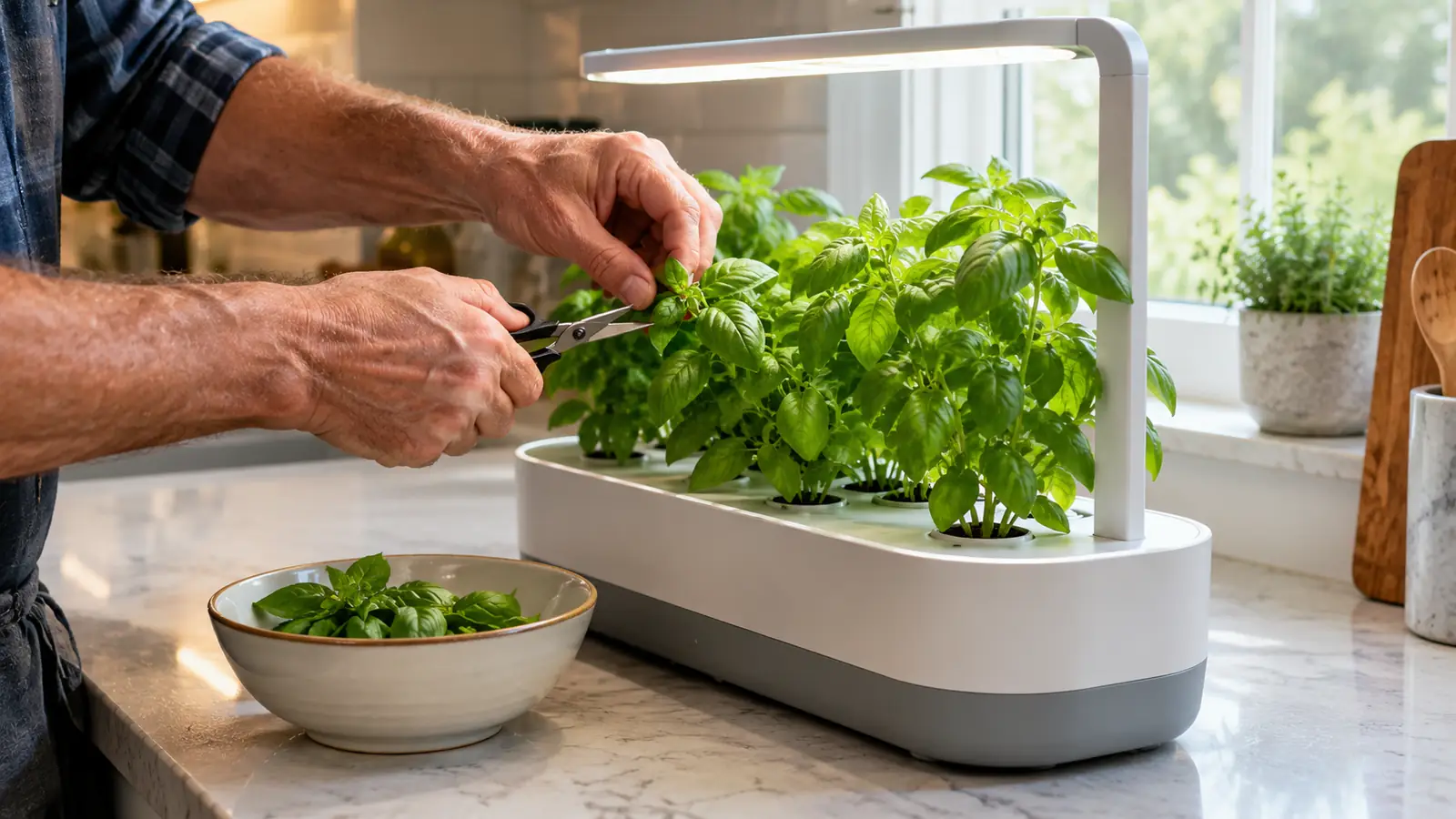
I kept using the same paper log I started with my shop-light shelf, so I wrote down the date I planted each pod and the date each one sprouted. The first kit was mostly herbs. The Genovese basil sprouted in five days, the dill in about a week, and the leaf lettuce took closer to ten. I topped up the water every few days, added plant food every two weeks, and trimmed the plants whenever they started crowding the light. That routine carried us from October through January, and we had fresh basil, dill, and leaf lettuce the whole time.
For the second cycle I used the Grow Anything kit with my own seeds, and it worked exactly the same way. The machine does not care whether the pod came from the store or from a seed packet I bought myself, as long as the sponge stays wet and the light stays on. That flexibility matters more to me than the convenience of the pre-seeded pods, because it means the unit is not tied to one supplier's catalog.
What Grew Well and What Did Not
I will start with the honest list, because a lot of the reviews you will read are all basil and sunshine until you hit the fine print. Basil is the star, no question. The Genovese basil sprouted in five days, hit the light arm in about three weeks, and I cut it three or four separate times before it finally turned woody around the four-month mark. Leaf lettuce grew well too, though it drinks more water than the herbs and it bolts fast if the room gets warm. Dill was fine, just not remarkable. Cilantro did well in the cool months and went to seed quickly once the room warmed up in the spring. The log tells me the first harvest came on day nineteen, and the second cycle matched that almost exactly.
The thing that did not impress me was the tomatoes. I tried the dwarf cherry tomato pods because I wanted to see whether a six-pod countertop unit could actually grow fruit. It can, in the sense that a tomato grows. One at a time, over the course of weeks, and it is not worth the pod slot. The same goes for peppers. The Harvest Elite is sized for herbs and greens, and it does those better than anything else I have used indoors. If you want real tomatoes, buy a proper hydroponic setup or use a big pot in a sunny window.
I grew flowers once, just to test the machine. The pods sprouted, the flowers bloomed, and Linda put them on the kitchen table for a week. It works fine. I just would rather spend the six pod slots on something I can eat.
The Day-to-Day Routine
The honest description of daily life with the Harvest Elite is that it is mostly boring, which is exactly what you want from a machine. The pump runs on its own timer and moves the water. The light comes on and goes off by itself. You do three things: top off the water, add plant food every two weeks, and trim the plants before they reach the light. I let my tap water sit out overnight before mixing in nutrients, just a habit I carried over from my soil plants, and the unit has never cared.
The water level indicator is the part you learn to trust. When the little light comes on, the tank needs a refill. In the warm months that was every three or four days, because the plants drink more when the room is warm. In the winter it stretched closer to a week. Missing a refill by a day did not hurt anything. Missing it by a week probably would, so I built it into my morning routine: pour the coffee, check the tank, top it off if it needs it.
The paper log earns its keep here. Because I wrote down when I planted, when I pruned, and when I refilled, I could look back and see that the second cycle ran smoother than the first for no reason other than I knew what to expect. That is the whole game with indoor growing: knowing what comes next and staying a little ahead of it.
The Parts You Will Keep Reordering
The machine itself is built like a tool. The base is solid, the light arm adjusts easily, and after months of daily use I have not had a single pump or timer problem. What you will keep buying is the consumables: the seed pod kits and the liquid plant food. The kit that came with the unit lasted one full cycle, and the food bottle lasted about two.
Here is what surprised me: the replacement kits are not a ripoff, they are just the convenience. You are paying for a ready-to-go pod, with the sponge and the seed already in place. You can absolutely buy the Grow Anything kit and use your own seeds, which I did for the second cycle, and the pods work out cheaper per harvest. The machine does not care, and your wallet will notice the difference.
Electricity is a rounding error. The LED light draws about twenty watts, less than an old incandescent bulb, and it runs fifteen hours a day. I noticed the pump running about as much as I noticed the power bill, which is to say not at all. Compared to a heated greenhouse or a grow tent, this is the cheapest thing I plug in all year.
The Things That Annoy Me
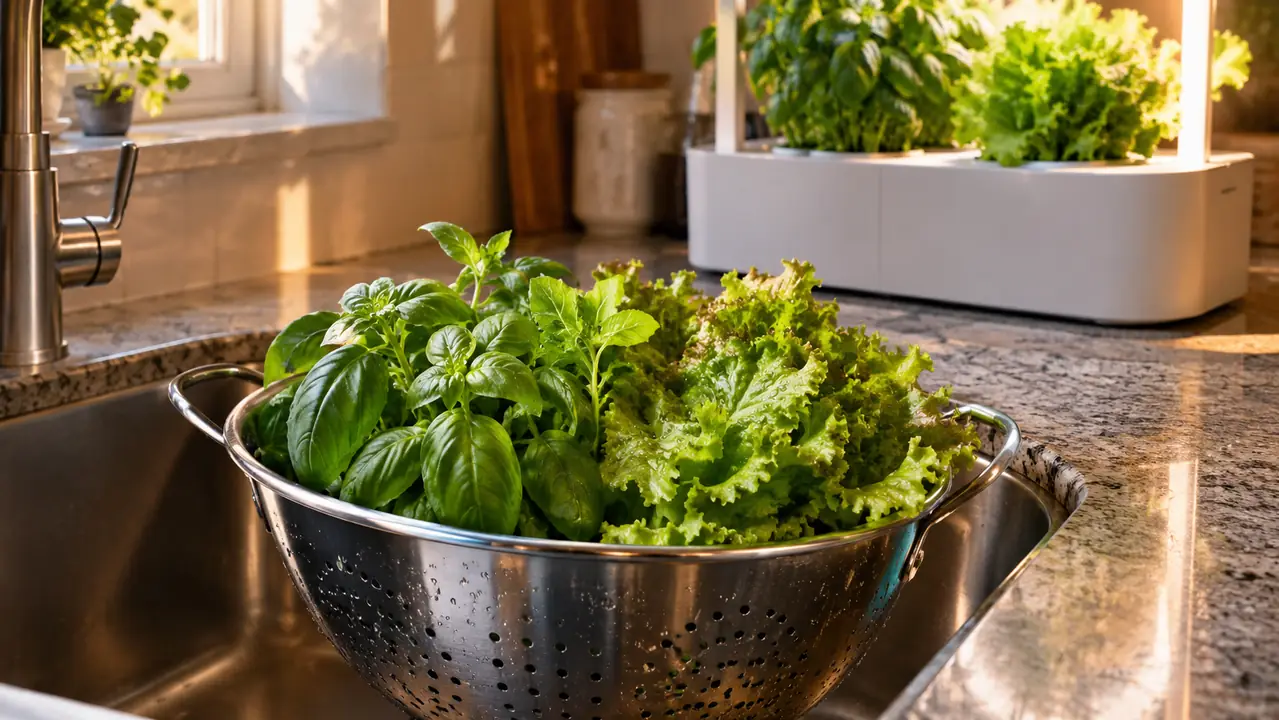
No machine is perfect, and the Harvest Elite has three things that get on my nerves. First, the tank is small. In the summer, with lettuce and basil going full tilt, I was topping it off every three days, and the refill light felt like it was always on. It is not a hard job, but it is a chore, and chores are what make people quit.
Second, the light glows. The grow light is bright, and it sits where you can see it from the couch. The control panel has a night mode for the little display lights, but the grow light itself stays on for its full fifteen hours, which means the room looks like a small spaceship from dinner until bedtime. It never bothered me in the spare bedroom. It would bother me in a kitchen where we eat dinner.
Third, six pods is not a lot once things get going. Basil alone will fill half the unit, and you will be pruning every week just to keep the plants clear of the light. I ended up using the Harvest Elite for herbs and keeping a separate soil pot on the windowsill for the bigger stuff. That is not a failure of the unit. It is just sizing, and sizing is worth knowing before you buy.
What I Liked
- Seeds sprout fast and reliably; the basil came up in five days
- The pump, timer, and light handle the watering and lighting on their own
- Compact enough for a shelf or counter, and quiet enough to ignore
- Simple control panel with no app and no phone pairing
- Built solid, and it ran for months without a single hiccup
Where It Falls Short
- Small water tank needs topping off every few days in warm months
- Replacement seed kits add up, though the Grow Anything kit works with your own seeds
- Six pods get crowded fast, and basil will take over
- The grow light casts a glow that is bright in a dark room
- Dwarf tomatoes and peppers are more of a novelty than a real harvest
I planted the first kit on October 12, and by November 9 we were cutting basil for pasta. That is the whole pitch in one line.
Who This Is For
The AeroGarden Harvest Elite is for someone who wants fresh herbs and greens in the winter without building a grow room. I say that with some authority, because that is exactly the situation I was in. If you cook with basil, if you are tired of buying plastic clamshells of herbs that go slimy in the fridge, and if you have a foot and a half of counter or shelf space, this unit is worth a look. It will not replace a garden. It will replace the herb section of your grocery list, and that has been worth it to us.
It is also for real beginners. My wife Linda had never grown anything in her life, and she was the one trimming the basil by week three. The machine does the hard parts. You just keep the tank full and cut the plants before they hit the light. If you can keep a goldfish alive, you can run one of these.
And it is for people with limited space: apartments, condos, small kitchens, and anyone whose back no longer enjoys raised beds. The unit does not care where it sits as long as the room stays warm and the tank stays full. If you want more growing room than six pods, the larger Bounty model is the step up to look at, but for herbs and lettuce the Harvest Elite is the right size for most counters.
Who Should Skip It
If you want to grow tomatoes and peppers in any real quantity, skip it. I tried the dwarf tomato pods so you do not have to. You get one tomato at a time, over the course of weeks, and it is not worth the pod slot. A real hydroponic setup, or even a big pot in a sunny window, will do more for you.
If you are the kind of gardener who likes to put seeds in the ground and let nature do its thing, you will find the Harvest Elite fussy. It needs water every few days, plant food every two weeks, and pruning most weeks. That is not much, but it is more than zero, and the people who fail with these units are the ones who expected it to run forever on its own. If you travel a lot, plan for who will water it while you are gone. The plants will not wait for you, and a week without water in the summer will set you back.
And if you are trying to save money on groceries, this is not the tool for that. The seed kits and nutrients are not free, and six pods of herbs will never replace a vegetable garden. This is a fresh-food machine for people who like to cook and grow, not a budget move. It is a convenience, and a good one, but it is a convenience.
Six months in, I would buy it again.
The AeroGarden Harvest Elite is not the cheapest way to grow herbs, and it is not the most powerful. It is the most dependable one I have used, and dependability is what keeps a retired HVAC guy from quitting. If you want fresh basil in January, check today's price on Amazon and see if it fits your shelf.
Amazon Check Today's Price on Amazon →