
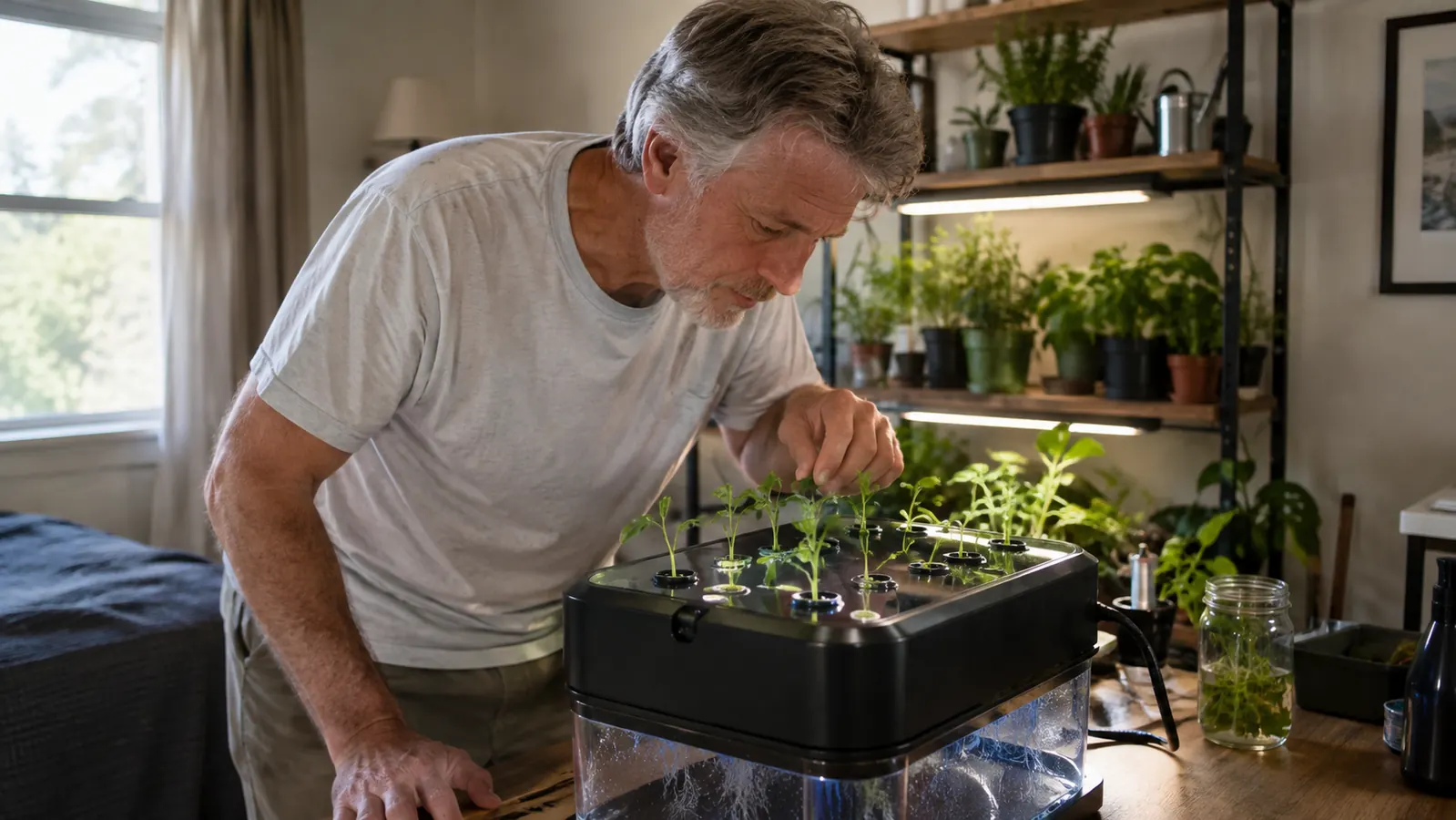
If you root cuttings the way I used to, in a tray of damp perlite under a plastic bag, you already know the two frustrations: half the cuttings rot before they root, and the other half take three weeks to decide they are going to live. I fought that method for two winters before I gave up on it. The last straw was a run of eighteen basil and tomato cuttings I took on the first Saturday of March, two years back. By day ten, eleven had gone soft at the base and the perlite had a gray film of mold on top. The survivors took twenty-three days to root, and even then two of them stalled the moment I moved them to soil. So I cleared a corner of the work table in our spare bedroom, set up the CLONE KING 25-site aeroponic cloner next to a set of passive hydroponic pots, and ran the two methods everyone keeps arguing about side by side. Same table, same tap water left to sit for a day, same nutrients at the same strength, and cuttings taken from the same mother plants on the same afternoon. I wrote all of it in my grow log that night, the same paper log I have kept since I started growing indoors four years ago, after a back problem made bending over raised beds too hard. The perlite tray had one more flaw I did not fully appreciate until I switched: the plastic bag held so much humidity that the leaves stayed wet, and wet leaves are how gray mold starts. I lost more cuttings to that than to anything else. My wife Linda mostly cares about the basil and the lettuce, and she was not shy about pointing out that the old method was not delivering.
Short answer: if you want the fastest, most reliable roots and you are willing to babysit a pump and check water levels daily, the CLONE KING wins. If you want something that roots cuttings with almost no attention and does not need electricity, HortiPots win. I kept both and I use both, but if I could only own one, it would be the CLONE KING, because in my grow room speed and success rate matter more than convenience. The rest of this comparison is the details behind that answer, including the days I would have been better off reaching for the HortiPots.
| CLONE KING 25-Site Aeroponic Cloner | HortiPots | |
|---|---|---|
| How it roots | Misted aeroponic roots in open air, fast | Passive hydroponic wicking through perlite |
| Time to roots | 7 to 10 days for most cuttings | 14 to 21 days, sometimes longer in cool rooms |
| Attention needed | Check water and pump daily, clean between runs | Fill the reservoir, walk away for a week |
| Electricity | Needs a pump running near 24/7 | None at all |
| Reliability for a beginner | Forgiving but requires daily checks | Nearly foolproof, hard to overwater |
| Cuttings per run | 25 sites in one compact unit | Depends how many pots you buy |
| Best for | Home growers who want quick, uniform roots | Growers who want a set-and-forget method |
Where the CLONE KING Wins
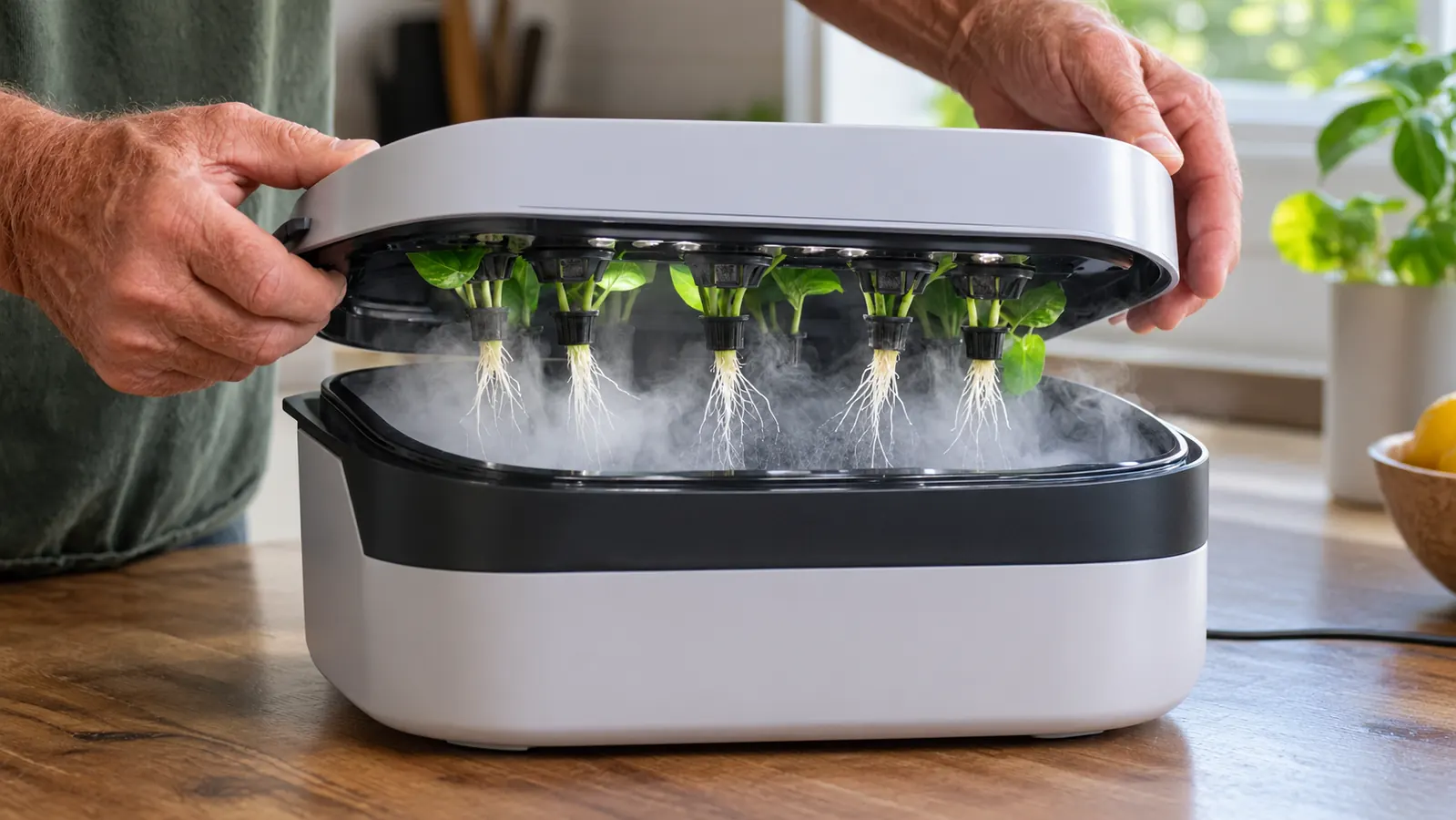
The CLONE KING is built around a simple idea: keep the cuttings misted with nutrient water so the roots never dry out and never sit in soggy media. The pump runs constantly, spraying the stems through a ring of misters, and the roots form in open air. Setup took me about twenty minutes. I filled the reservoir with tap water that had sat out overnight, added nutrients at half the strength I use for mature plants, and let the pump run for an hour before I put any cuttings in, just to make sure every mister was putting out a fine spray and none were clogged. My grow room sits at about 72 degrees in the winter, and at that temperature most of my cuttings had visible roots in eight days. Basil rooted in six. Tomato suckers took nine. The first run was twenty-five cuttings, mostly basil and a few tomato suckers, and twenty-three of them rooted. The two that failed were cuttings I took from a tomato plant that had already been stressed by a cold night on the back porch, which is exactly the kind of cutting I should not have taken in the first place. I noted that in the log too.
I ran a second batch of basil three weeks later, thirty cuttings this time, and every single one rooted. That is the kind of result that makes you trust a tool. The clear lid is the detail I did not expect to matter as much as it did. With HortiPots, checking roots means lifting the cutting out of the perlite and disturbing it. With the CLONE KING, I just look through the lid. I could watch the roots lengthen day by day, and because I was not handling the cuttings, they never got a chance to suffer from my curiosity.
When I transplanted the rooted cuttings, the difference showed up again. The CLONE KING roots were thick and white, two to three inches long by day ten, and the cuttings went into soil without a single droopy leaf. With perlite tray cuttings I usually lost a day or two to wilting while the roots adjusted. These never paused. That matters more than it sounds when you are trying to keep lettuce coming all winter.
The maintenance is real but not bad. I check the water level every morning with my coffee, and every couple of days I top it off. Between runs I empty the reservoir, rinse it out, wipe down the lid, and check the misters for clogs. That takes maybe twenty minutes. The pump hums, which took me a week to stop noticing, and it does need power. An ice storm knocked the power out overnight in February, and by morning the cuttings had wilted hard enough that I nearly scrapped the run. They bounced back once the pump came on, but I learned to check the forecast before I start a batch and to keep the unit on the table closest to the window so I notice problems sooner. For me the trade is still easy: a faster, more uniform root system than I have gotten from anything else in four years of growing indoors.
Where HortiPots Win
HortiPots work on a completely different principle. You fill the outer reservoir with water and nutrients, and the inner pot wicks moisture up through perlite or a similar media. The cutting sits in the damp perlite and roots at its own pace, with no pump, no electricity, and no misters to clog. For a home grower who travels, or who simply does not want another machine to maintain, that is a real advantage. I filled the reservoirs on a Sunday evening, left town for four days on Monday morning, and came home on Thursday to perlite that was still evenly moist and cuttings that looked exactly as I left them. I cannot say that about the CLONE KING, which needs its water topped up every couple of days and its pump checked for clogs. There is also no cleaning cycle between runs with HortiPots. When a run finishes, you dump the perlite, rinse the pot, and start over. No pump to replace, no power draw, nothing to break. They also do not care about your schedule. I have left them for a long weekend more than once, and the perlite stayed damp the whole time.
The tradeoff is patience, and patience is the honest cost of the HortiPots. My first HortiPot run, the same basil and tomato cuttings I took that same afternoon, rooted in about two and a half weeks. A few took three. The roots were healthy and white, but they were slower and less uniform than the CLONE KING's, and the slow ones were always the ones in the pots where I had packed the perlite too tightly. I also learned that not every plant likes the steady moisture. A batch of rosemary cuttings sat in the damp perlite for four weeks and never rooted at all, just went brown at the base. Rosemary wants drier conditions, and the HortiPots could not give them. I wrote that failure in the log and stopped trying to root rosemary in them.
The most honest comparison came late in the season. I took twelve cuttings from the same basil plant on the same afternoon, put six in the CLONE KING and six in HortiPots, and kept the water and nutrients identical. The CLONE KING batch was ready to transplant in eight days. The HortiPots batch took eighteen. Both batches grew into healthy plants, but the CLONE KING batch was a full ten days ahead, and in the winter that ten days is the difference between a harvest and an empty bowl.
HortiPots are also quieter in every sense. There is no hum of a pump and no risk of a power outage killing a whole run. If you are not in a hurry, that is a fair trade. For me, it was the difference between a steady weekly harvest and waiting an extra week for every single tray. And when I do use them, they live on the covered back porch in the warmer months, where the lack of an extension cord is a genuine convenience.
Root cuttings in about half the time
The CLONE KING 25-site aeroponic cloner is the fastest way I have found to turn one good plant into a dozen. Check today's price on Amazon and see if it fits your grow room.
Amazon Check Today's Price on Amazon →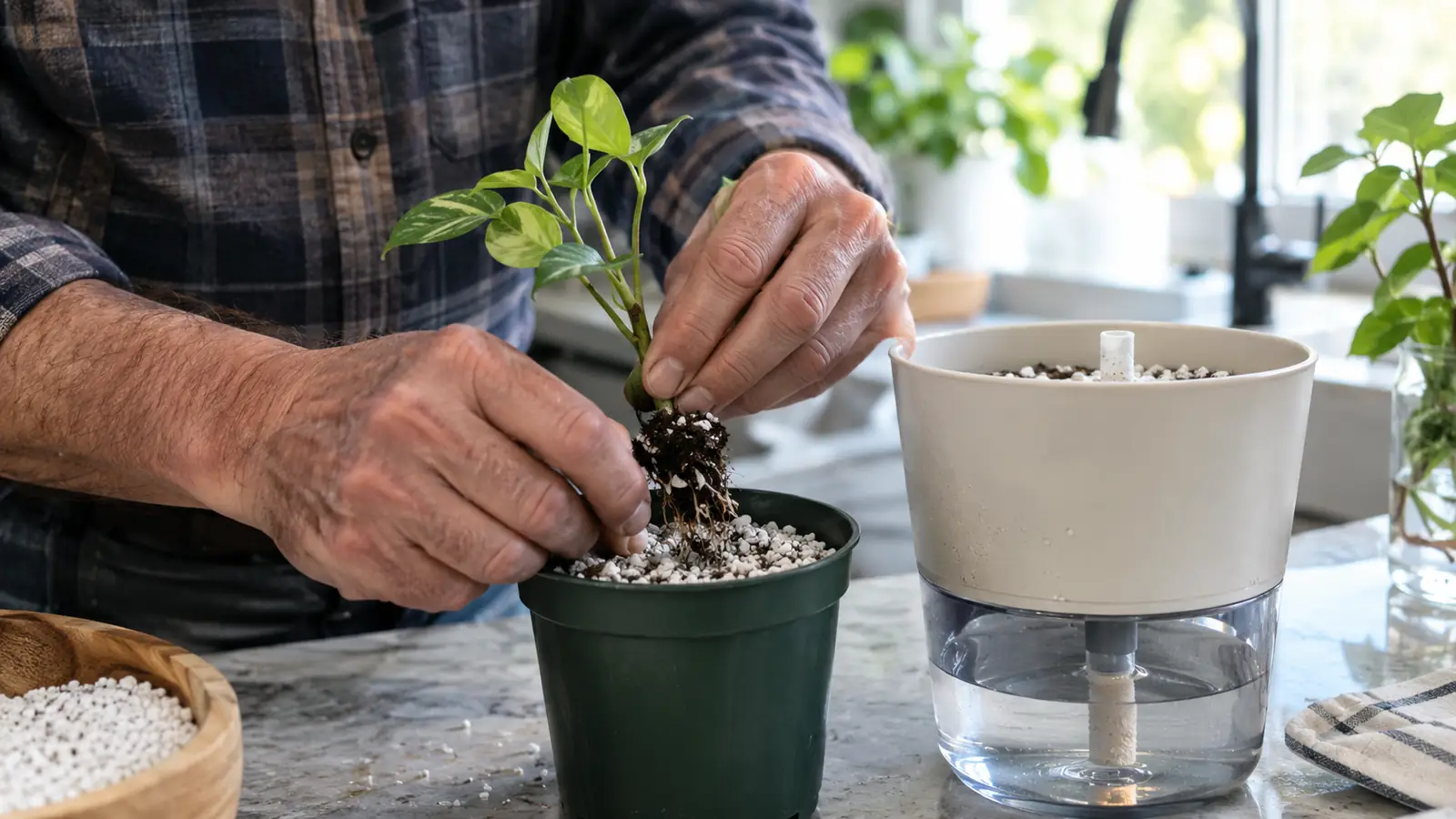
Who Should Buy Which
Buy the CLONE KING if you are the kind of grower who already checks your plants every morning anyway. My routine is simple: coffee in one hand, a look through the clear lid in the other, a glance at the water level, and I am done before the mug is empty. That daily check is the whole price of admission, and the payoff is the fastest, most reliable roots I have gotten from any method. The 25-site capacity means one unit handles a whole season of cuttings. In a single winter I ran three generations of basil in the spare bedroom, which is one more than I ever managed with the perlite tray. It also suits anyone who has lost cuttings to rot in soil or perlite, because the open-air roots simply do not sit in wet media. If you take cuttings seriously, even a few times a year, the CLONE KING turns a fiddly chore into a two-minute job. I have taken cuttings from the same basil plants for two winters running now, and the CLONE KING is the reason I have not bought basil seedlings since.
Buy HortiPots if you want a method that works while you are busy elsewhere. They are ideal for a first-time grower, for someone who cannot check plants daily, or for anyone who dislikes machines that need cleaning and electricity. They are also cheaper to run, since there is no pump to replace and no power draw. And if you only take a few cuttings a couple of times a year, HortiPots give you perfectly good results with a fraction of the fuss. My honest advice is to match the tool to the season: HortiPots for the slow, easy runs, and the CLONE KING when you need speed. In the warmer months, when I move some of my growing out to the covered back porch, the HortiPots earn their keep. In the winter, when the spare bedroom is doing all the work and Linda is asking when the next batch of lettuce will be ready, the CLONE KING is the one that answers.
Twenty-three of twenty-five cuttings rooted in eight days. I have never had another method come close to that success rate.
The fastest roots I have gotten in four years of growing
The CLONE KING 25-site aeroponic cloner earned its spot as the tool I reach for first. See today's price on Amazon and decide if it belongs in your grow room.
Amazon Check Today's Price on Amazon →