
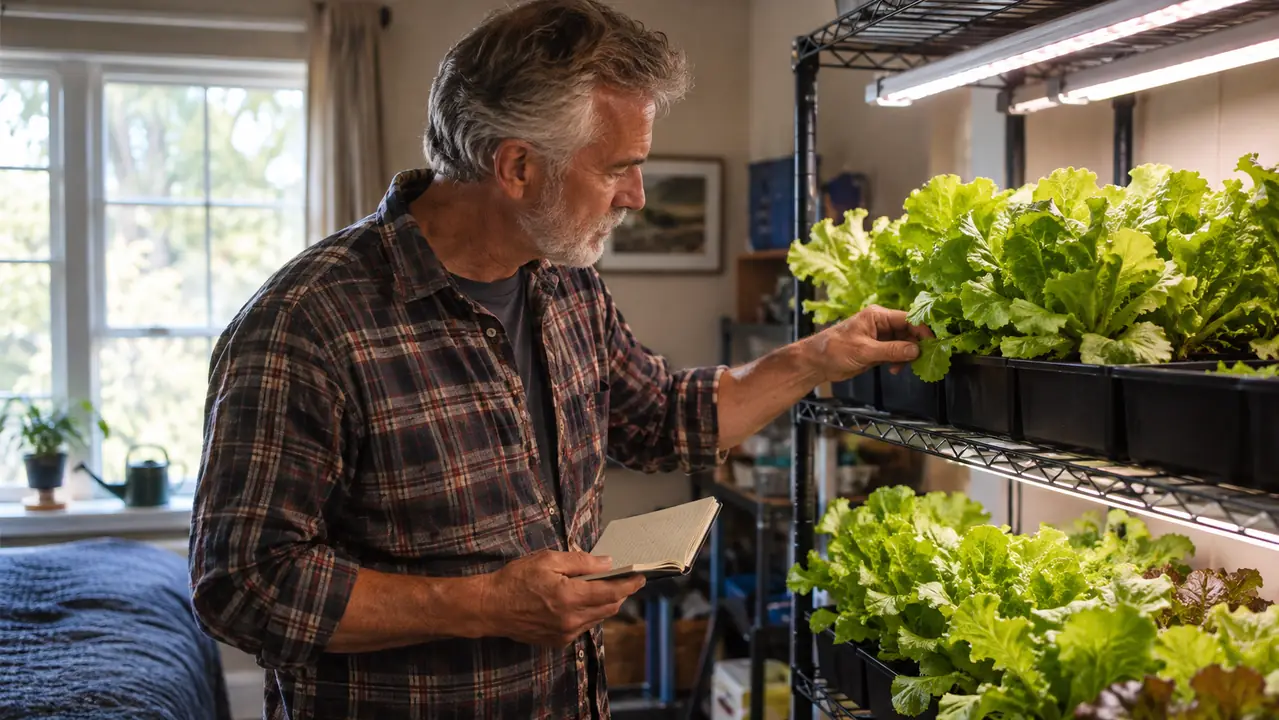
When I retired from HVAC work, my back had other plans. Four years ago I had to give up the raised beds out back, and that hurt worse than the back did. I'm Gary Mercer, 61, and I live outside Raleigh. Thirty-eight years of crawling under houses and hauling compressors had caught up with me, and bending over to weed just wasn't in the cards anymore. So I looked at the spare bedroom upstairs and figured I'd grow inside instead.
The first two attempts were a mess. I started with soil and a cheap liquid fertilizer from the box store, and I fed the plants the way I'd been feeding myself, a splash here and a guess there. The lettuce bolted, the basil turned pale, and Linda said the store stuff tasted better anyway. She's the one who mostly cares about the basil and the lettuce.
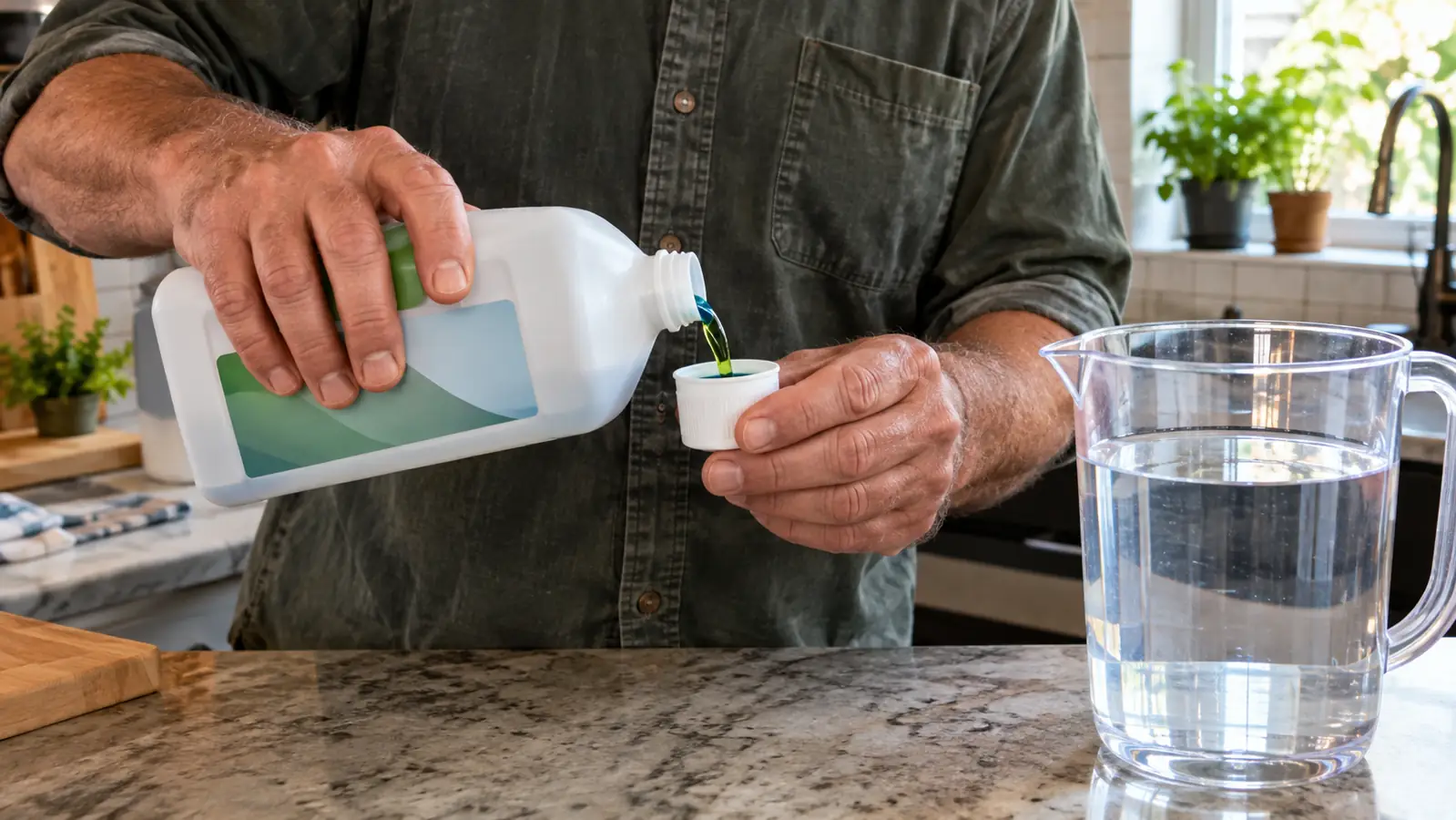
A friend who grows peppers indoors told me about General Hydroponics Flora Series. It's a three-part set: FloraMicro, FloraBloom, and FloraGro. You mix them in different amounts depending on whether the plant is growing, flowering, or fruiting, and the chart on the side of the bottle tells you exactly how many teaspoons per gallon. That sounded like something I could do, because it's all measurements, and measurements I understand. I ordered the quart bottles in April of 2022.
The first thing I learned is that order matters. You mix FloraGro and FloraMicro first, stir the water, then add FloraBloom. I let my tap water sit out overnight before mixing, and I kept the pH between 5.5 and 6.5 with a cheap test kit. I mixed half strength for the first week to be safe, then followed the chart exactly after that. Every feeding went into my paper grow log, which I've kept since day one. Date, amounts, pH, what the leaves looked like. My handwriting is terrible, but the log doesn't care.
I started the seeds on April 3, 2022, and we had our first salad on May 22. The romaine came in ahead of the schedule I'd drawn for it, and the basil filled a whole shelf. I kept the lights on fourteen hours a day and wrote the timer settings in the log. By June I'd moved everything out to the covered back porch, and the plants did even better with the open air moving through. The same three General bottles carried me through that whole first season, and they're still on my shelf today.
The room itself is nothing special. A two-shelf stand, a shop light, a clip-on fan, and a timer. I built the stand in an afternoon with parts from the hardware store. What makes it work is the routine, and the routine is in the notebook. I check the water level every morning with my coffee, and I write down anything that looks different. The plants don't care how nice the room is. They care that the feed is right.
The same three bottles I bought in April of 2022 are still on my shelf, and the lettuce has come in every month since.
Start with the three bottles, nothing else
The quart set of Flora Series is what I started with, and it's still what I use. No additives, no extra bottles, no special water. Just the chart, a measuring spoon, and a notebook. Check today's price on Amazon if you want to see the set I'm talking about.
Amazon Check Today's Price on Amazon →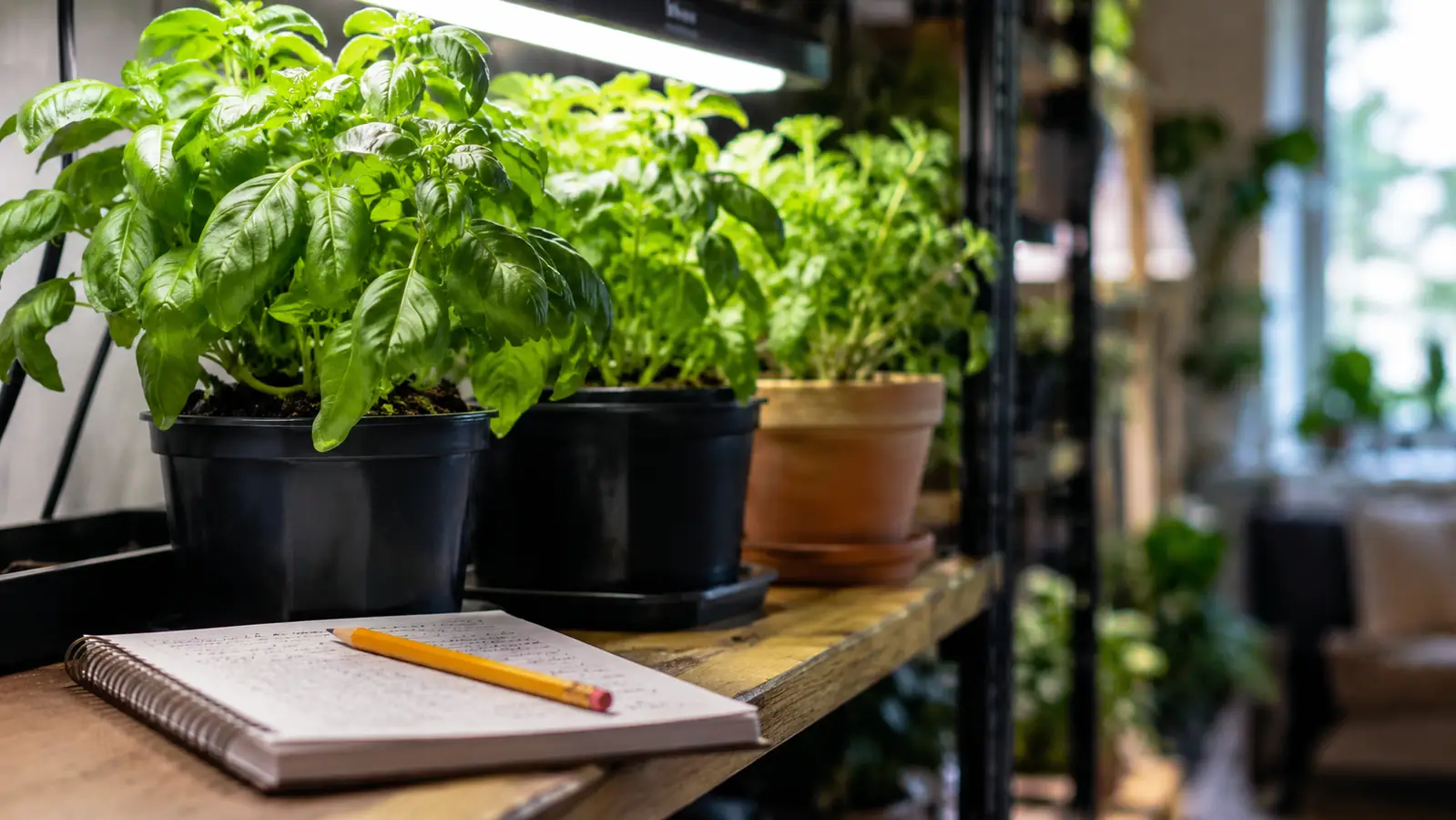
The part nobody tells you is that a three-part system forces you to pay attention. You can't dump one bottle in and call it done. You mix, you measure, and you watch the plants. I learned to read the leaves the way I used to read a manifold gauge set. Dark green means the feed is right. Pale lower leaves mean you're short on nitrogen, which is what FloraGro is for. Brown edges mean you overdid the FloraBloom. I made every one of those mistakes, and the log shows exactly when.
My worst month was January of last year. I got lazy with the pH checks, and the lettuce came in bitter. Linda said so right to my face. I pulled out the log, saw that I'd skipped the pH for ten days straight, fixed the mix, and the next batch was back to normal. That's the whole story of this hobby in one paragraph. When you measure, it works. When you guess, it doesn't.
I've since added a small air stone and a better fan, but the nutrients haven't changed. I still mix the same three parts, in the same order, at the same strength, from the General chart. Flora Series is not fancy. It's the plainest, most boring nutrient system I could have picked, and that's exactly why it works for me. I don't want to experiment with my salad. I want to know the romaine will be ready when Linda wants it.
We eat something from that room every week of the year. In the summer it's mostly basil and tomatoes off the porch. In the winter it's lettuce, spinach, and more basil, because Linda refuses to buy the pale heads at the store. I keep it going because it's a system that works, and after thirty-eight years of fixing systems, I like being on the working side of one for a change.
What I'd Tell You If We Were Sitting at My Kitchen Table
If you came over and asked whether to try Flora Series, I'd tell you to start with General and nothing else. First, buy the quart bottles and don't add anything until you've run one full season. Second, keep a paper log. It doesn't need to be neat. Mine is a spiral notebook with a pencil, and it's the most useful thing in the grow room. Third, follow the chart on the bottle and don't get clever. The people who write those charts have grown more lettuce than we ever will. Measure everything, write it down, and change one thing at a time. Do that and you'll have more basil than you know what to do with. Linda will be happy, and so will you.
The same set I'd hand you at my kitchen table
The quart Flora Series set is what I'd tell you to start with, and it's the one I still use four seasons in. No extra bottles, no special equipment. Just the three parts, a chart, and a notebook. Check today's price on Amazon if you want to see it for yourself.
Amazon Check Today's Price on Amazon →