
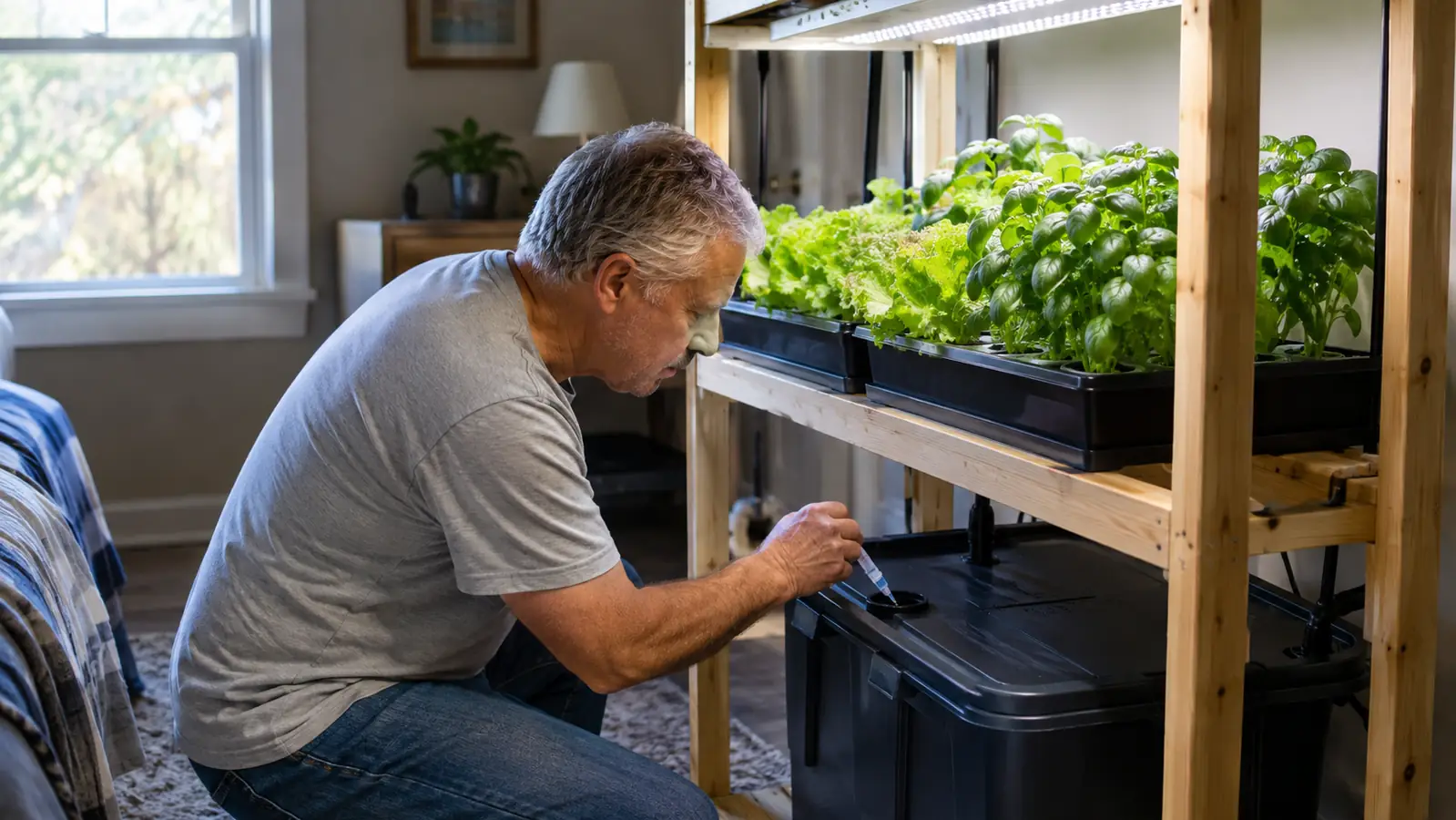
Four seasons ago I hung a grow light in our spare bedroom and started treating it like a service call. I kept a paper log, checked the reservoir every other day, and wrote down every mix I made. The first nutrient I bought was the General Hydroponics Flora Series, mainly because it was the one every forum seemed to settle on. I am still using it today, and there are things I wish somebody had told me before I mixed my first gallon. This review is the version I did not get. That is what four seasons of notes have taught me.
I am not going to tell you the Flora Series is the only nutrient you will ever need, because it is not. I will tell you what it does well, where it frustrates, and where the marketing stops and the measuring begins. If you are the kind of person who likes to know why a thing works, you will probably get along with it fine. If you want to pour one bottle into a reservoir and walk away, you will not. I bought this kit with my own money, and nobody from the company has ever asked me to say anything or paid me to do so. This is my log talking, not their brochure.
The Quick Verdict
The best honest three-part system for a home grower who measures things. Cheap per dose, stable once you learn its habits, forgiving if you keep a notebook. Not plug-and-play, and it will punish you if you skip the pH meter.
Amazon Check Today's Price →If you are going to measure anyway, start with this one
The Flora Series is where most home growers land after they burn out on single-bottle blends. It is sold everywhere, it has decades of forum history behind it, and a quart of each part lasts a small grow space a full season.
Amazon Check Today's Price on Amazon →How I've Used It
Setup is a two-by-four shelf in the spare bedroom with a single LED board overhead and a ten-gallon tote as the reservoir. I grow lettuce, basil, and other leafy things, with tomatoes on the covered porch in summer. Linda mostly cares about the basil. The porch plants are her project now that the bedroom shelf runs all winter.
My water is city tap from the kitchen sink. I fill two jugs the night before and let them sit, which knocks the chlorine smell out. The Flora Series mixes fine in that water. I cannot speak for well water or reverse osmosis, because I have never run either. One idea I borrowed from growers who run aeroponic towers: the fine roots hanging in the mist want a nutrient that stays fully dissolved, so nothing settles on the roots. The cleaner the mix, the calmer the roots.
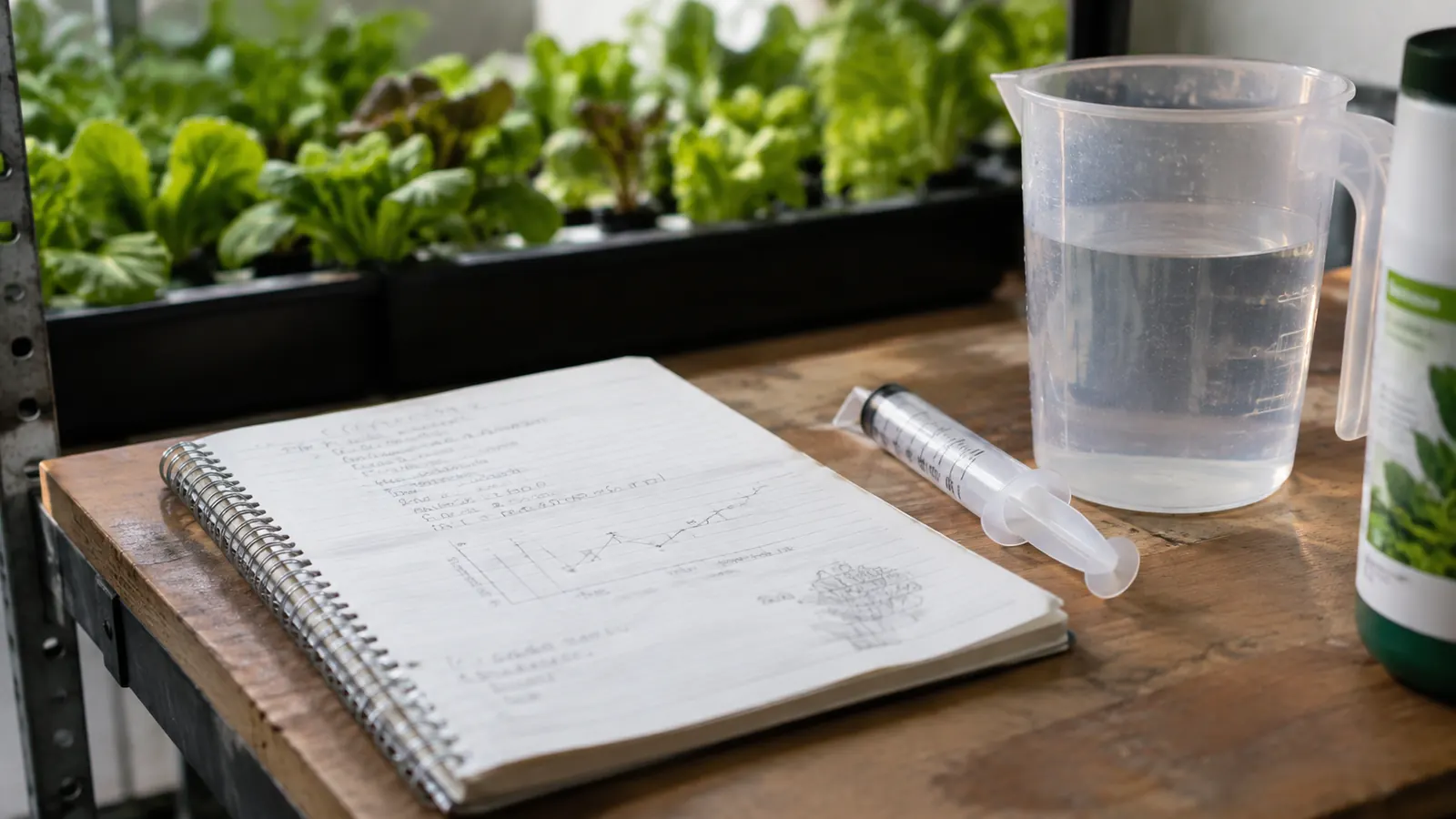
The thing that matters more than the brand is my log. I record the date, the milliliters of each part, the water I started with, and what the leaves looked like. After two seasons I could look back and see exactly which mix turned the leaf edges down. You do not need a lab. You need a notebook, because your memory of last season lies. Linda calls it my homework. She is not wrong.
What the Three Bottles Actually Do
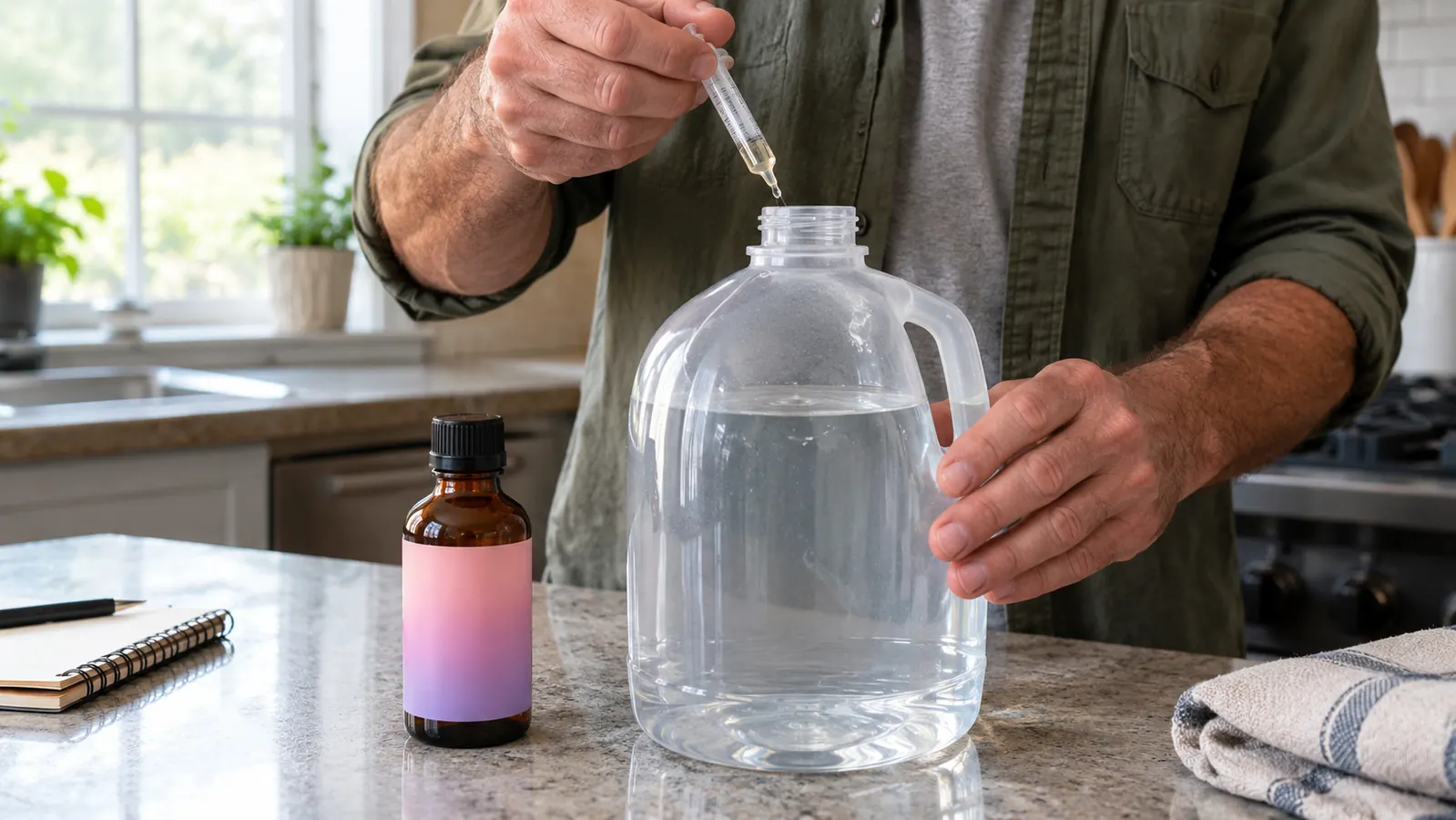
One-bottle nutrients are a compromise, because everything rides in one jug. The Flora Series is three concentrates you mix yourself, which sounds like more work until you realize it is the same work, just split into steps. FloraGro pushes leafy growth. FloraBloom does the same for flowers and fruit. FloraMicro carries the trace elements plus, and this is the part the label does not say out loud, the calcium.
Calcium is the catch. Single-bottle fertilizers usually skimp on it because calcium does not stay dissolved next to phosphorus in a concentrate. General Hydroponics gets around that by putting the calcium in FloraMicro and asking you to mix it first, into plain water, before anything else touches the jug. Skip that order and the jug turns cloudy and the calcium drops out of solution. That is not a defect in the product. It is a rule you learn once, the hard way.
Mixed in the right order, the Flora Series is stable. I have kept a mixed batch in a covered jug for ten days and it smelled fine on day ten and measured the same as day one. That matters in a small grow room where one gallon can feed the shelf for two weeks, and it matters even more in a tower with the roots in open air, where you want a nutrient that stays dissolved and clean. This one does.
Storage is easy. The bottles live on a shelf in the spare room all year, out of the light, and they keep fine at room temperature. A quart of each lasts me through the season, so I buy once in the fall and once in the spring. That is a better record than the one-part bottles I started with, two of which went bad on me halfway through spring.
What Nobody Tells You About the Dosing
The numbers on the bottles are in milliliters, and they assume more water than a bedroom grower has. General Hydroponics prints the feeding schedule on the bottles, which is more than most brands do, but that schedule assumes a bigger reservoir than mine. My first season I burned leaf tips twice because I took the chart at its word. Now my lettuce gets about a third of what the label suggests, and I creep up only when the plants ask. The good news is the correction is easy: cut the dose, watch the leaf. The Flora Series is concentrated. A little goes a long way, and the leaf tip is the only honest meter you own.
There is a reason experienced growers talk about their mix in ratios instead of milliliters: the ratio survives changes in water. Mine hovers near the old standby, a micro-bloom run with no grow part at all, which many people use for flowering plants. I mention it because the bottle does not. The three-part system lets you run two parts if the plant wants it. Try doing that with a one-bottle blend.
You will read advice online about parts per million and electrical conductivity, and if that sounds like foreign math, ignore it for now. The syringe and the leaf tips are enough. I have never owned a meter that cost more than a sandwich, and I have grown good lettuce without one. What I do own is a clean syringe and a rag.
Rinse the syringe after every use. Concentrate left in the barrel dries into a crust that is a pain to clean, and it throws off the next dose. Small stuff, but the small stuff is the whole game with this system.
The pH Job Nobody Puts in the Box
Here is the honest part. Flora nutrients, like just about every nutrient, will drift the pH of your water over a week. The drift is not a flaw. It is what concentrated salts do as the plants eat. But you need to know it is coming, because it is the number one reason a healthy-looking setup suddenly goes wrong.
The box does not include a pH test kit or a bottle of adjuster. General Hydroponics sells both, but they are separate purchases, and a lot of first-time buyers open the box and assume the job is done. It is not. Figure the test drops and the adjuster into the cost before you start, the same way you would figure in a hose before you install a sprinkler.
For me the drift is slow. I top up the reservoir, check the pH every other day, and add a few drops of adjuster maybe once a week. In summer, with tomatoes flowering, it is more frequent, but that is the plant asking for more of everything. The trick is to adjust before the plants show you they are unhappy, which is the same trick as all of gardening. A stable pH is worth more than any brand name on the bottle. The Flora Series is not the kind of product that does the thinking for you, and that is exactly why I like it.
Where the Flora Series Falls Short
It is not the easiest nutrient on the shelf, and I will not pretend it is. There are one-part products that dissolve with a swirl and you are done, and you pay for that convenience in flexibility and usually in price per dose. For me the trade is worth it. For somebody who does not enjoy measuring, it is not, and it is fair to hear that before you buy.
The bottles themselves are a small, steady nuisance. The cap and the flip spout work fine, but nutrient residue dries on the spout and clogs it if you do not wipe it after every pour, so I keep a rag on the shelf. And the FloraMicro will settle a little sediment at the bottom after months between uses. It is not ruined. Shake it hard and it goes back into solution. Nobody mentions either of those things in the reviews.
The first month is the hardest, and nobody should be surprised by that. You are learning three bottles, a syringe, and a pH kit all at once, and around week three you will be sure you bought the wrong product. You did not. Your water, your mix, and your patience simply have not settled into a routine yet. Give it a season before you judge it.
Worth saying plainly: this is not set-and-forget. If you want to fill a reservoir and leave town for two weeks, the Flora Series will not cover for you. The water level drops, the mix drifts, and the plants notice. I have left mine for a long weekend and come back to a shelf that looked fine, but that is a weekend, not a vacation. Plan your trips accordingly.
What Four Seasons of Notes Show
The evidence, such as it is, lives in my log. Leafy greens grow steadily, the tips stay green, and I have not lost a crop to a deficiency since the first year, when the problem was me, not the nutrient. The basil that Linda likes comes in faster than we can use it, which she treats as a personal victory she mentions weekly.
The numbers that matter to a home grower: a quart of each part lasts me a full season, a mixed gallon keeps for a week and a half before it starts to go off, and the cost per dose comes in lower than the pre-mixed bottles I started with. I would not trade any of that for a fancier label. The expensive nutrient is the one that makes you pay for marketing you do not need.
The last thing the log shows is the boring truth. There is no magic in the bottles themselves, no blend that grows plants without attention. The Flora Series puts the controls in your hands and then expects you to read them. Four seasons in, I still think that is the right trade, and it is why I keep buying it.
If I had one honest reservation, it is this: General Hydroponics makes dozens of additives, and the marketing invites you to believe you need them. You do not, for leafy greens and herbs. The three parts are enough. I spent the last two seasons running nothing but the core kit, and the quality did not change an inch.
What I Liked
- Three separate parts, so one kit handles leafy greens, herbs, and flowering plants
- Concentrated: a quart of each part lasts a home grower a full season
- Decades of forum history, so almost any problem you hit is already documented
- Mixes clean with ordinary tap water that has sat out overnight
- Mixed solution stays stable in a covered jug for a week and a half
Where It Falls Short
- No pH test kit or adjuster in the box, and you will need both
- Dosing chart assumes a bigger reservoir than a bedroom grow space
- Residue dries on the flip spout and clogs it unless you wipe it down
- FloraMicro settles a little sediment after months of storage
- Not set-and-forget. The reservoir wants attention two or three times a week
In four seasons I have wasted exactly three batches. All three were my fault: wrong mixing order, a skipped pH check, and a dose I doubled because I was in a hurry.
Who This Is For
The Flora Series fits a grower who keeps a notebook, reads the label twice, and would rather understand the why than trust a promise. It suits a shelf in a spare room with a tote reservoir and someone who checks in most days. It is also the right answer if you are on a budget and want one kit that grows lettuce in January and tomatoes in July. It is a system for people who like to know what they are doing and why.
If the idea of dialing in a mix sounds like a chore, this is not the product for you, and no amount of YouTube will change that. If it sounds like a puzzle, you will be happy here for a long time.
Who Should Skip It
Skip it if you want one bottle and one scoop. Skip it if you will not test pH, because a three-part nutrient will not fix a pH problem and neither will anyone's marketing. Skip it if you travel for weeks at a time, because the reservoir still wants attention while you are gone. And honestly, skip it if measuring brings you no pleasure, because there are easier ways to grow.
So my answer, if you ask whether the Flora Series is worth it, is yes with a pencil. Buy it, keep a notebook next to it, and expect to throw out the first batch. Everybody does. You are paying for control. Use it. Come back and tell me what you learned once you have a season under your belt. That is the fun part.
Still the system I reach for after four seasons
It will not do the thinking for you, but it will feed a shelf of greens steadily all year, and a quart of each part lasts a long time. If that sounds like your kind of project, it is worth opening the box.
Amazon Check Today's Price on Amazon →