
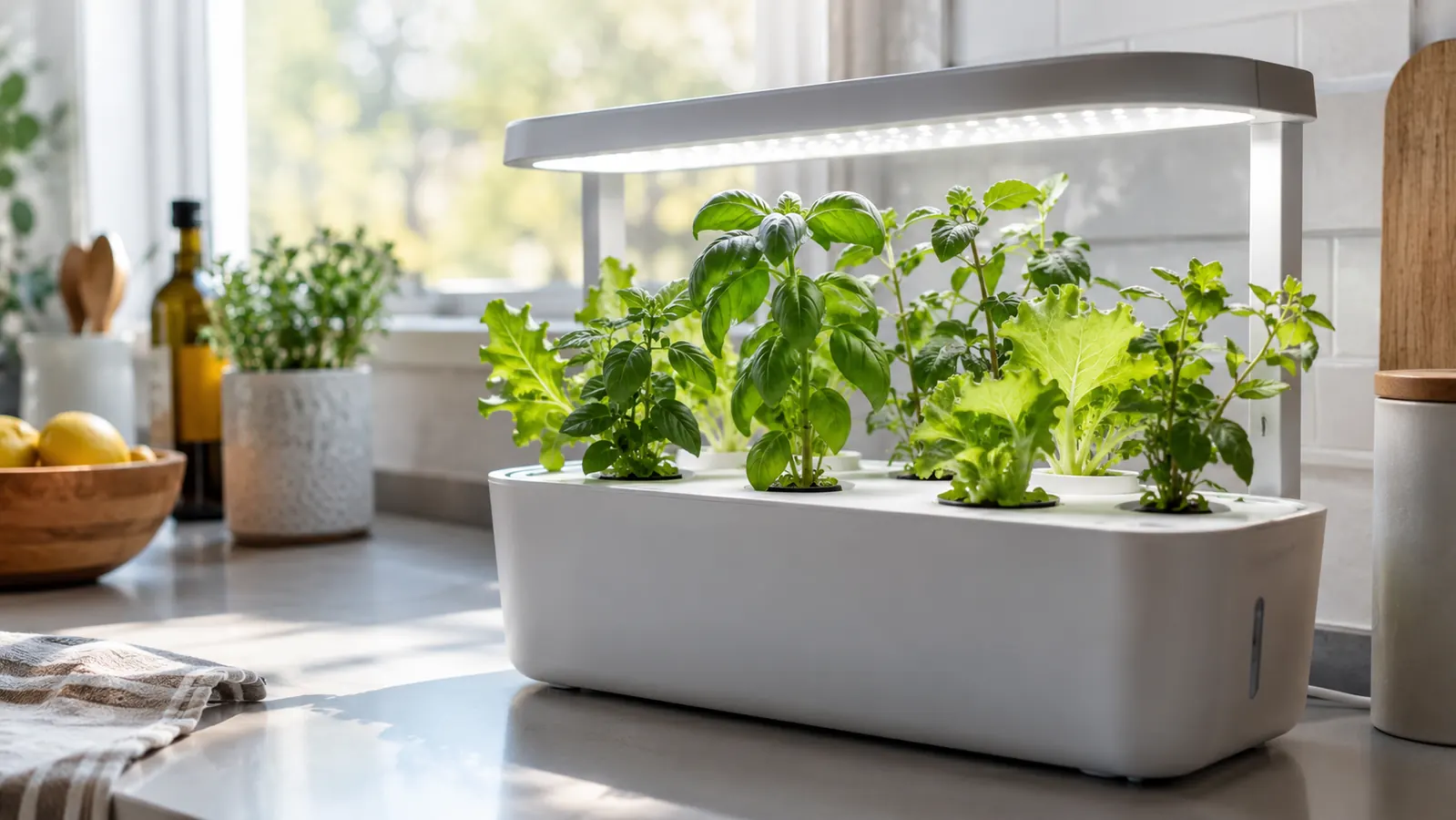
I bought the AeroGarden Harvest Elite in early January, mostly because my back had finally had enough of the raised beds out back. Bending over to weed and water was turning a hobby into a chore, and Linda kept saying we were paying grocery store prices for basil that went limp in the fridge. So I cleared a shelf in the spare bedroom, set up the AeroGarden, and started keeping a paper grow log like I do for everything else. Six months later, I have a pretty clear picture of what this machine does well, what it does poorly, and who should think twice before buying one.
This is the honest version. Not the product page version, not the unboxing video version. I ran this unit through three full plantings, killed one set of lettuce by being careless, and learned exactly where the AeroGarden Harvest Elite earns its keep and where it just gets in the way.
The Quick Verdict
A solid, fuss-free countertop garden for herbs and salad greens, as long as you accept that it is a small appliance with small harvests, not a replacement for a real garden.
Amazon Check Today's Price →Want fresh basil in January without a grow tent?
The AeroGarden Harvest Elite is the most reliable countertop unit I have used. Check today's price on Amazon and see if it fits your shelf.
Amazon Check Today's Price on Amazon →How I've Used It
I ran the AeroGarden Harvest Elite for six months, from January through June. Three plantings: a herb seed kit that came with the unit, a lettuce mix, and then another round of herbs. The unit sat on a sturdy shelf in the spare bedroom, about three feet from a north-facing window, and I did not move it once. The grow light ran on the built-in timer, 15 hours a day, and I topped off the water roughly every other day once the plants got big.
I kept a paper log like I do for every project. Water added, nutrients added, pH when I remembered to check it, harvest weight in grams. That log is where most of what I am about to tell you comes from. I am not guessing. I weighed the basil, I counted the days from seed to first harvest, and I wrote down the failures too.
The first thing you notice is how easy it is to set up. The AeroGarden Harvest Elite comes mostly assembled. You snap on the grow deck, drop in the seed pods, fill the reservoir, and plug it in. I had it running in about twenty minutes, and I am not someone who reads manuals cover to cover. The control panel is simple: a light button, a water button, and a menu button. If you can set a digital clock, you can run this thing.
The bedroom stays around 68 degrees in the winter, which I later learned is on the cool side for basil. The first seeds sprouted on day six, and I wrote that date in the log with a star next to it. By day ten, every pod had something green in it. The first sprout came up in the pod closest to the middle of the deck, and for about a week it was the only one, which made me wonder if I had done something wrong. Then the rest followed, and I stopped worrying. I also learned the pump runs on a cycle, not continuously, and that the light timer holds its settings when you unplug the unit, which I tested when I cleaned the reservoir in March.
What Nobody Tells You Before You Buy
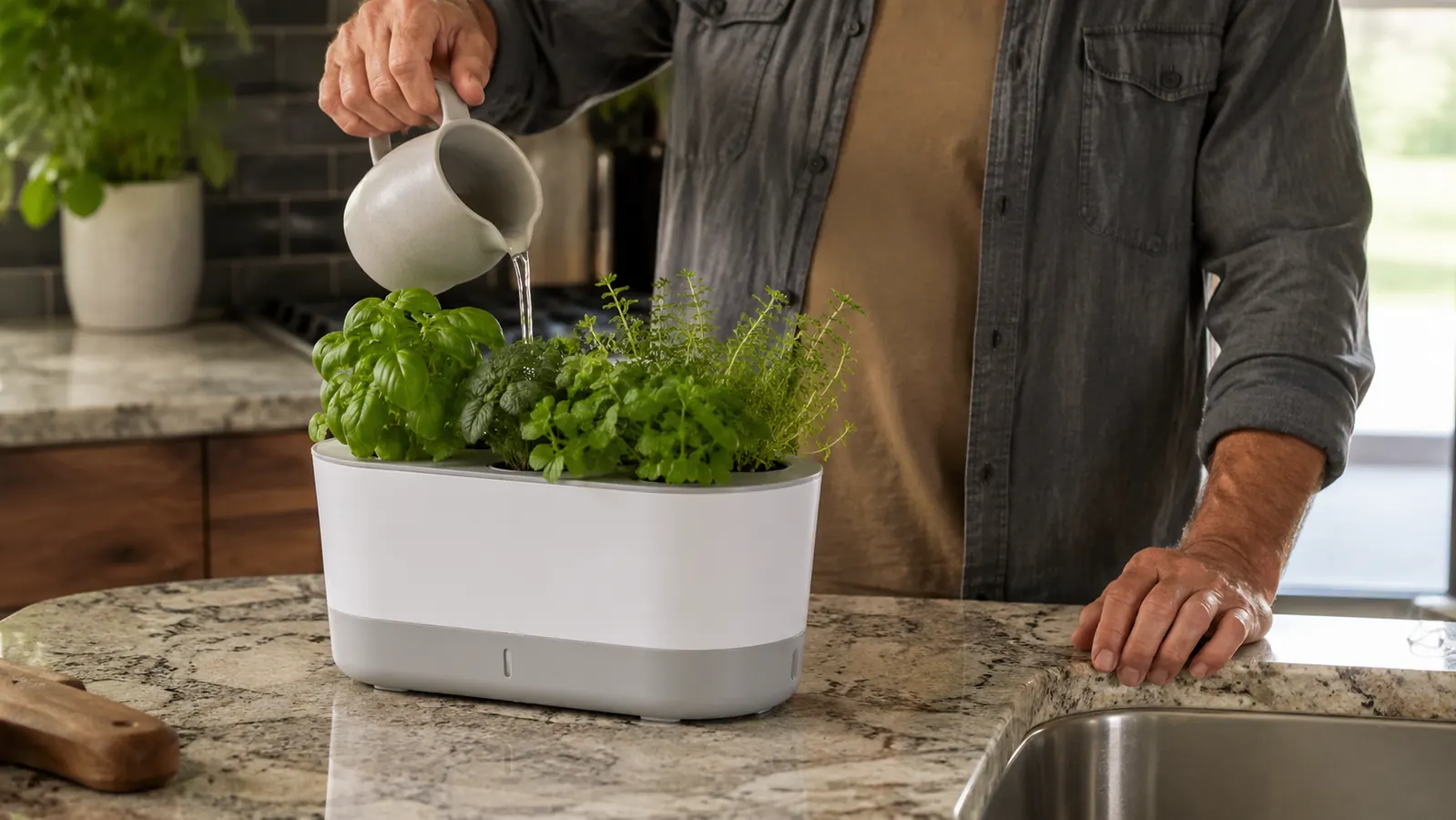
Here is the part the product photos skip. The AeroGarden Harvest Elite is louder than you expect. Not loud like a window air conditioner, but there is a constant hum from the pump and a gentle gurgle from the water. In a bedroom, it is noticeable. In a living room, you will hear it during quiet scenes in a movie. It never bothered me, but Linda noticed it the first night, and if you are a light sleeper, you do not want this on your nightstand.
The second thing nobody tells you: the light is bright. Really bright. The Harvest Elite uses a 20-watt LED grow light, and when it is on, the whole room glows pinkish-white. I actually liked it, it made the spare bedroom feel like a tiny greenhouse. But if you are planning to put this in a corner of your living room, understand that it will wash out your TV screen and change the mood of the room for 15 hours a day. The light also makes the seed pods visible, so you will see the empty spots where plants have not sprouted yet. That bothered me more than it should have.
The third thing: the water level indicator is a float, and it is not always accurate. Twice I looked at it, saw it in the green zone, and then the pump started making a higher-pitched whine. That whine means the water is low even when the float says otherwise. I learned to ignore the float and just check the reservoir by lifting the grow deck. That is not a dealbreaker, but it is the kind of thing you only learn by owning one.
And the fourth thing nobody tells you: the cleaning. About every three weeks, I had to lift the grow deck, empty the reservoir, and scrub the inside with a soft cloth. Green algae showed up on the walls of the reservoir and on the roots themselves. The first time I saw it, I thought I had done something wrong, but it is just what happens when you run water and light in the same box. I also had to wipe the seed pod labels, which got damp and started to peel. None of it is hard, but it is a chore you should plan for, not discover.
The AeroGarden Harvest Elite is a small appliance with small harvests. Once I accepted that, I stopped being disappointed and started actually using it.
The Harvests: What You Actually Get
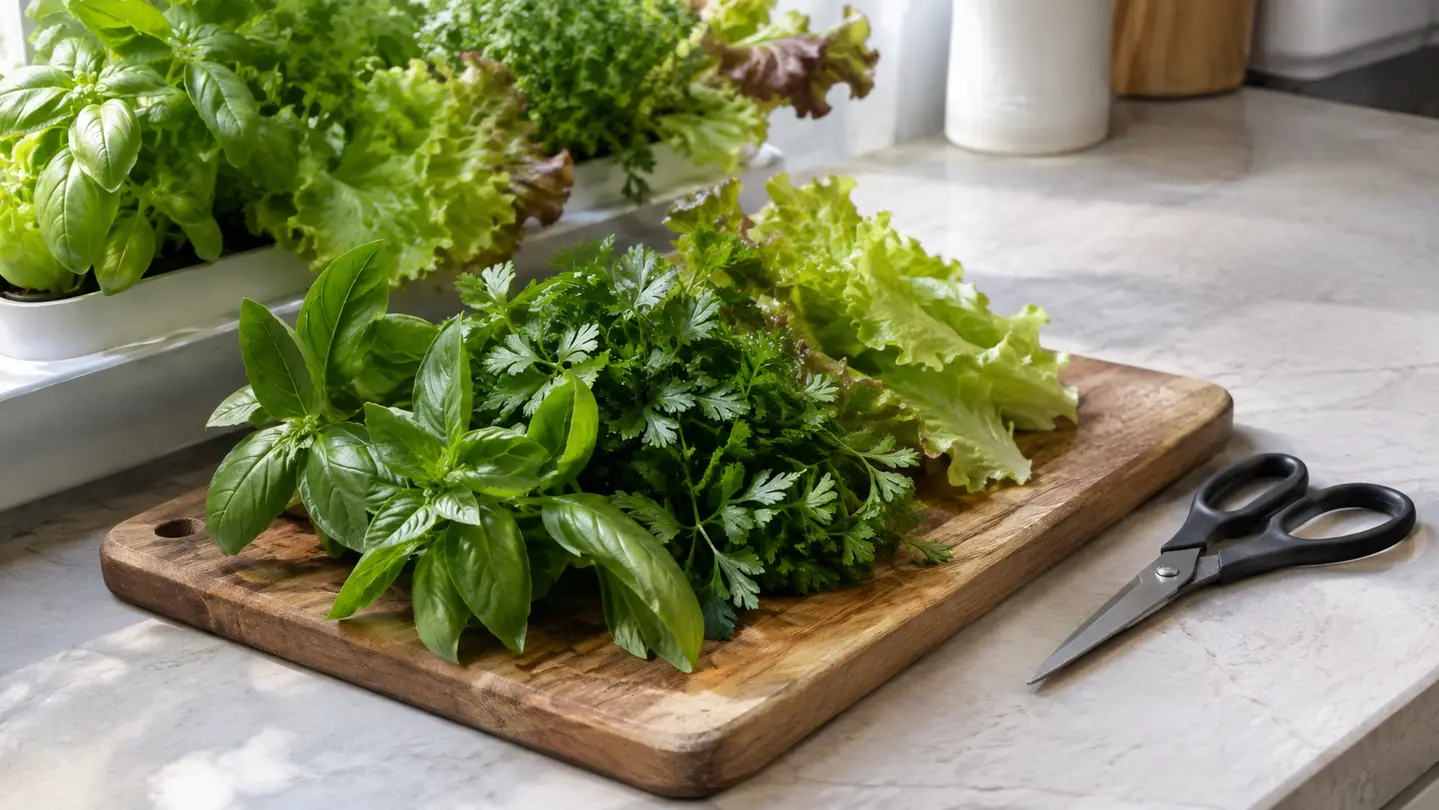
Let me give you real numbers from my log. The basil in the first planting: I harvested 40 grams about three weeks after the seeds sprouted, then another 30 grams a week later, then a steady 20 to 25 grams every week after that. That is enough for a decent batch of pesto every couple of weeks, or a handful of basil on top of pasta a few times a week. It is not enough to supply a restaurant, and it is not enough to preserve for the winter. It is enough for a household of two.
The first really satisfying harvest was March 14. I cut 45 grams of Genovese basil, which made a full batch of pesto with a half cup of walnuts and a good pile of Parmesan. Linda put it on pasta that night and said it tasted like the stuff from the farmers market, which from her is high praise. I wrote 'best batch yet' in the log and underlined it twice. The earlier harvests had been fine, but that batch was the first one that felt like it mattered. I still had to buy lettuce that week, but I did not have to buy basil. That was the day the unit earned its spot on the shelf.
The lettuce was a different story. I planted the lettuce seed kit that came with the unit, and it grew fine for about three weeks. Then I got careless. I went out of town for four days, came back, and the reservoir was nearly empty. The lettuce had bolted, which means it went to seed and turned bitter. That was my fault, not the machine's. The AeroGarden Harvest Elite has a water level indicator, but it does not have an automatic top-off. If you travel, you need a plan, either a friend to check it or a separate auto-watering setup.
The second herb planting was the most successful. I grew Genovese basil, Thai basil, dill, and parsley. The Thai basil did surprisingly well, better than it ever did in the raised beds. The dill got tall and floppy and I had to stake it with a chopstick. The parsley was slow but steady. Total harvest over the full six months: about 1.4 kilograms of herbs and salad greens. That is not a lot in the grand scheme of things, but it is a lot of pesto and a lot of salads, and it all happened in a room that otherwise would have been empty.
What the AeroGarden Harvest Elite Does Well
The AeroGarden system is genuinely foolproof for seeds. The seed pods come pre-seeded and pre-fertilized. You drop them in, add water, and the machine tells you when to add nutrients. I have killed plants in every medium you can name, and I did not kill a single seed pod in six months. The one lettuce failure was a water issue, not a seed issue. For a beginner, that is worth a lot.
The grow light is also excellent. The Harvest Elite's 20-watt LED is bright enough that I never needed a supplemental light, even in a room with a north-facing window. The built-in timer is reliable, and the automatic on and off cycles meant I never had to remember to turn it off. The light also makes the plants grow compact and sturdy. My basil did not get leggy the way it does on a windowsill.
The AeroGarden Harvest Elite is also quiet enough for a bedroom, as long as you are not a light sleeper. The pump hum is constant but low. I got used to it in about a week. And the whole unit is small enough to fit on a shelf, a counter, or a side table. It takes up about the same footprint as a large toaster.
Where It Falls Short
The biggest limitation is the size. The AeroGarden Harvest Elite holds six pods. That sounds like a lot until you realize that six pods of lettuce is maybe two salads a week. If you want to grow enough to actually replace your grocery store greens, you need two or three of these units, or a bigger model like the AeroGarden Bounty. I have a single unit, and I treat it as a supplement, not a replacement.
The second limitation is the cost of the seed pods. The AeroGarden brand pods are not cheap, and you have to keep buying them. There are third-party pods that work, and I have used them, but the germination rate is not as consistent. If you are the kind of person who likes to save money by buying generic, you will be annoyed by how much the brand-name pods cost.
The third limitation is the nutrient schedule. The AeroGarden Harvest Elite tells you when to add nutrients, which is great, but the schedule is aggressive. I followed it exactly for the first planting, and the burn showed up as brown tips on the lettuce leaves about ten days after the first feeding. The leaves were still edible, but they looked rough and the edges curled. On the second planting, I cut the dose to half and added nutrients every two weeks instead of every week, and the burn never came back. The kit's own nutrients are fine, and this is not a knock on the product, just a note that the label is written for perfect conditions and my spare bedroom in January is not those. That is the kind of thing I wish the manual had said on page one instead of leaving me to figure it out by looking at sad lettuce. Your mileage may vary, but I would start with less than the instructions say.
Who This Is For
The AeroGarden Harvest Elite is for the person who wants fresh herbs in the winter, who has a shelf or a counter, and who does not want to learn hydroponics. It is for the cook who is tired of buying a bunch of basil for one recipe and watching the rest rot. It is for the person who tried a windowsill herb garden and watched it get leggy and die. It is for the beginner who wants a small win, not a science project.
It is also for the person with limited mobility. I bought mine because bending over raised beds hurt my back. The AeroGarden Harvest Elite sits at waist height on a shelf. I can tend it standing up, and I can harvest without kneeling. That alone was worth the price to me.
Who Should Skip It
Skip the AeroGarden Harvest Elite if you want to grow a serious amount of food. Six pods is a hobby, not a food source. If you want to grow tomatoes or peppers, you need a taller unit with a stronger light, like the AeroGarden Bounty. If you want to grow enough lettuce for a family of four, you need multiple units and a bigger budget for pods.
Skip it if you are bothered by noise or bright light. The pump hum is constant, and the grow light is intense. If you want something you can put in a corner of your living room and forget about, this is not it. You will notice it every time you walk into the room.
Skip it if you hate buying consumables. The AeroGarden business model is built on seed pods and nutrients. You will be buying them forever. If that bothers you, look into a DIY hydroponic setup or a traditional potted herb garden on a sunny windowsill.
What I Liked
- Setup takes about 20 minutes, even for a beginner
- The grow light is strong enough to grow compact, healthy herbs
- The built-in timer makes it nearly automatic
- Seed pods germinate reliably, even in my cold spare bedroom
- Small footprint, fits on a shelf or counter
- Easy to tend standing up, which matters if you have back trouble
Where It Falls Short
- Six pods is a small harvest, not a grocery replacement
- The pump hum and water gurgle are noticeable in a quiet room
- The grow light is bright enough to wash out a TV screen
- Brand-name seed pods are expensive and you have to keep buying them
- The water level float is not always accurate
- The nutrient schedule can cause burn if you follow it exactly
Alternatives I Considered
I looked at the AeroGarden Bounty before I bought the Harvest Elite. The Bounty holds nine pods, has a taller light arm, and can grow things like peppers and cherry tomatoes. It is also bigger and more expensive. For my situation, a spare bedroom shelf and a back that does not like bending, the Harvest Elite was the right size. If I had more space and wanted to grow more, I would have bought the Bounty.
I also considered a DIY hydroponic setup with a plastic tote and a submersible pump. It would have been cheaper, but it would have been a project. I am retired, and I like projects, but I did not want my salad greens to be one. The AeroGarden Harvest Elite is the appliance version of hydroponics. You trade some control and some cost for convenience, and for me that was a fair trade.
Ready to grow your own basil this winter?
The AeroGarden Harvest Elite is the easiest countertop garden I have used. See today's price on Amazon and decide if it fits your shelf.
Amazon Check Today's Price on Amazon →