
If you grow indoors, you already know the problem. You hang a light, the plants stretch, the leaves turn pale, and you spend the whole season wondering if you should have spent more. I did that for two years before I bought the Mars Hydro TS1000. I am 61, I spent 30 years in HVAC, and I treat growing like a project: I measure things, I keep a notebook, and I admit what goes wrong. This is that notebook, after months of real use in a converted spare bedroom upstairs.
The short version: the TS1000 is the light I wish I had started with. It is not the biggest light Mars Hydro makes, and it is not the cheapest thing on Amazon. But for a home grower with one room and a shelf of greens, it does the job without drama. I ran it through the fall, the winter, and into the spring, and the log tells the story better than I can. Here is what months of daily use actually look like.
The Quick Verdict
A dependable full spectrum LED that earns its keep in a small home grow room. Not the most powerful light for the money, but the most consistent one I have used.
Amazon Check Today's Price →The light I leave running 12 hours a day
After months of daily use, the Mars Hydro TS1000 is still the first thing I switch on in the morning. If you are setting up a small indoor grow space, this is the one to start with.
Amazon Check Today's Price on Amazon →How I've Used It
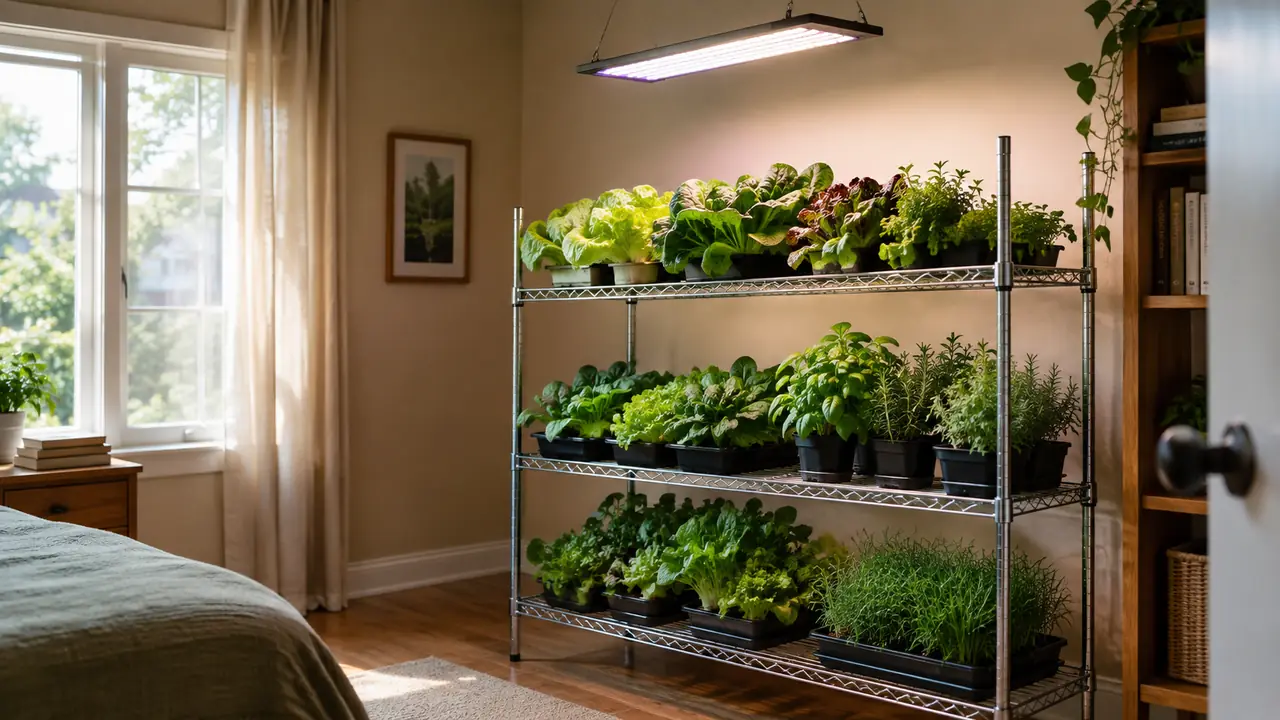
My setup is simple. A spare bedroom upstairs, about 10 by 12 feet, with a wire shelf along one wall. The shelf is a standard 4 by 2 foot rack with three levels: the top for the light and the seedling tray, the middle for the main grow, the bottom for nutrients and supplies. I grow lettuce, basil, parsley, and a few other herbs in one aeroponic tower with twelve planting sites and two deep water culture bins, one for lettuce and one for herbs. The tower sits in the middle of the shelf, the bins at the ends. The Mars Hydro TS1000 hangs from the ceiling on its included cables, about 18 inches above the canopy when the plants are young, raised to 24 inches as they grow. I use city tap water that sits out overnight before I mix nutrients, so the chlorine can gas off. I run a two-part nutrient at about half the label strength and keep the pH around 6.2 with a cheap meter I recalibrate every few weeks.
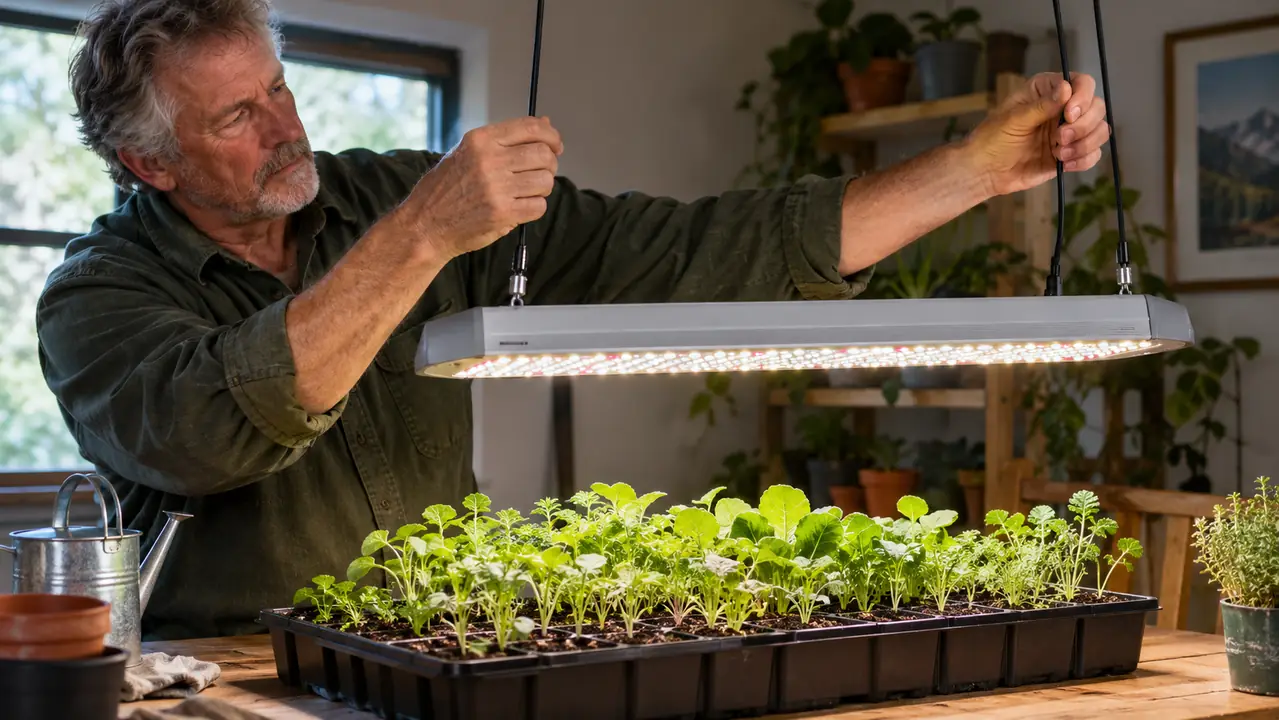
I run it 12 hours a day, every day, on a cheap mechanical outlet timer, the kind with the little pins you push down. In the warmer months I move some of the operation to the covered back porch, but the TS1000 stays upstairs year round. It has been running nearly every day for about eight months now, and it has not missed a beat. I hung the light on September 6 and wrote the first entry in my grow log that evening. The entry says: 'Light hung, 18 inches above the tower, dimmer at 75 percent.' Nine days later I wrote: 'Seedlings reaching, no stretch.' That is the note I had been waiting two years to write.
The light has a dimmer knob on the driver, which I did not expect at this price. I keep it at about 75 percent for seedlings and turn it up to full once the plants have a few true leaves. That single feature saved me from buying a second light for the propagation shelf. One morning in December the light was off when I came up with my coffee. The timer pins had been bumped, probably when I moved a bin the night before. It took me longer to find than to fix, and it is worth checking the timer the same way you check the water level.
What the TS1000 Actually Does Well
The first thing I noticed was how even the light spread is. My shelf is 4 feet wide, and the plants at the edges grow almost as fast as the ones in the middle. With my old shop light, the outer plants always lagged. I borrowed a cheap lux meter and took readings across the shelf at 18 inches. The center read about 28,000 lux, and the far ends were still over half that. My old T8 shop light had a hot spot in the middle and dropped to about a third of that at the ends. Numbers like that are why I stopped rotating trays twice a day. I wrote the readings in the log on October 14, and that page is still the one I show people who ask about the light. The Mars Hydro TS1000 covers the whole shelf without me touching a thing.
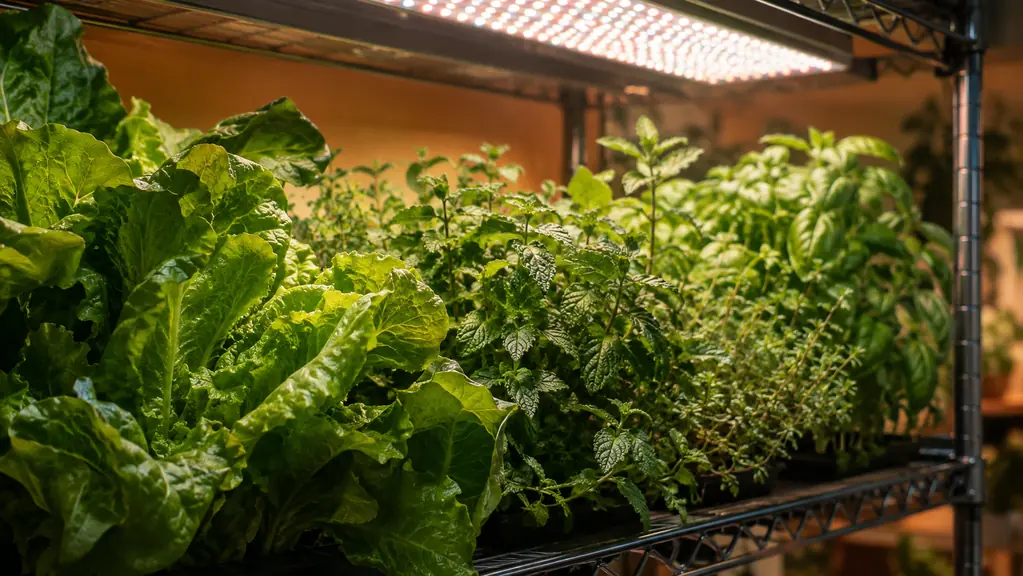
The second thing is the full spectrum. I grow mostly leafy greens and herbs, and they stay compact and dark green under this light. The basil that used to get leggy by February now looks like July basil. The lettuce does not bolt early. For a home grower who just wants fresh greens in January, that is the whole ballgame. I should say what I was comparing it to. My old setup was a 2 foot shop light with two T8 tubes, rigged to the shelf with zip ties. It cost a third as much, and it grew plants, after a fashion. The leaves were pale, the stems stretched, and I spent the whole season fighting it. The TS1000 is not cheap compared to that. It is cheap compared to the hours I lost.
The third thing is heat. I am an HVAC guy, so I notice heat. The TS1000 runs cool enough that I can put my hand right under the panel after it has been on all day. In a small bedroom in North Carolina, that matters. My old setup raised the room temperature by several degrees and I had to run a fan constantly. With the Mars Hydro light, the room stays comfortable and the plants do not get stressed. In January, when the outside temperature was in the twenties and the furnace was cycling, the grow room ran only about a degree warmer than the hallway. That is the difference between a comfortable hobby and a room you avoid.
The basil that used to get leggy by February now looks like July basil. That is the whole ballgame for a home grower.
How It Performed Over the Full Season
I started this grow in early October, which is when the days get short here. By late November, the lettuce was ready to harvest, and I have been cutting leaves every week since. Here is the month-by-month from the log. October: seedlings under the dimmer, no stretch. November 22: first full lettuce harvest, three heads from the deep water culture bin. December: I cut leaves every four or five days, about a sandwich bag full each time. January: an ice storm knocked the power out for fourteen hours, and when it came back the timer came back on schedule. February: the basil took off, and the parsley finally did what parsley is supposed to do. Linda has claimed the basil for pesto, so that crop was spoken for before it was cut. Counting it up, the room produced close to four pounds of lettuce, a pound and a half of basil, and enough parsley and cilantro to keep the kitchen stocked. That is not a farm. It is a hobby that feeds the salads and the pesto.
The cilantro was the surprise. I have never had luck with cilantro indoors. This year it went to seed twice before I figured out it wanted the cooler corner of the shelf, and then it gave us a solid month of cutting.
The Mars Hydro TS1000 has run about 2,900 hours total, and the output has not visibly faded. I check the plants every morning with my coffee, and I have not seen the stretch or pale leaves that tell you a light is losing its edge. In March I dusted the panel with a dry microfiber cloth, and the next morning the difference was visible in the seedlings. Dust matters more than people think, and it is a two minute job.
The one thing I will flag is the fan noise. It is not loud, but it is there, a low hum you notice in a quiet room. I sleep one floor below and I do not hear it, but if you plan to put this in a bedroom you actually sleep in, you will know it is running. I also learned that the dimmer is not a set-and-forget control. When I moved seedlings from the propagation shelf to the main shelf, I forgot to turn the light back up from 75 percent. The plants grew fine, just slower, for about ten days. That was my mistake, not the light's, but it is worth writing in the notebook so you do not do the same.
Who This Is For
The Mars Hydro TS1000 is for the home grower with one room, one shelf, and a realistic goal: fresh greens and herbs indoors without a big electric bill. It is also for the person who wants a light that will still be working next year. I have had cheaper lights die after one season. This one is built like the tools I used to install, with a solid driver and a metal housing that does not feel like it will crack if you bump it. I measured the draw once with a plug-in power meter, and the electric bill did not move enough to notice. That matters when the light runs twelve hours a day, every day.
If you are growing a small number of plants in an aeroponic tower or a deep water culture bin, this is the size to get. It covers a 2 by 2 foot area at full intensity, and a 3 by 3 foot area if you back it off a bit. That matches the footprint of most home aeroponic systems I have seen.
Who Should Skip It
If you are trying to fill a whole room or a large tent, this is not the light for you. The TS1000 is a single panel, and it is honest about its coverage. You would need two or three of them to light a 4 by 4 tent properly, and at that point a larger Mars Hydro unit makes more sense. A single panel over a 4 by 4 tent leaves the corners dim, and dim corners mean stretched, pale plants.
I would also skip it if you are the kind of grower who wants to control everything from a phone app. The TS1000 has a dimmer knob and a power cord. That is it. No Bluetooth, no timers built in, no app. I like the simplicity, but I know plenty of people who would not.
What I Liked
- Even light spread across a 4 foot shelf, no daily tray rotation
- Full spectrum keeps leafy greens and herbs compact and dark green
- Runs cool enough to keep a small room comfortable
- Dimmer knob is genuinely useful for seedlings
- Solid build, still running strong after about 2,900 hours
Where It Falls Short
- Low fan hum you will notice in a quiet room
- No app or smart controls, just a knob and a cord
- Single panel coverage means you need two for a 4 by 4 tent
The Tradeoffs Nobody Mentions
The biggest tradeoff is the cord and the driver. The driver is separate from the panel, which is good for heat, but it means you have a brick of a power supply hanging in the middle of your cable management. I zip-tied mine to the shelf frame with a little air space around it, and it has been fine, but it is not the cleanest setup. The driver gets warm at full power, not hot, but I would not set it on carpet. The panel itself stays cool. The driver is the part that does the work. The cord between the driver and the panel is long enough to route along the back of the shelf, which is how I have it now. It took five minutes.
Here is the tradeoff that matters for aeroponic growers specifically. The panel is not sealed. The diodes sit behind a clear cover, but the edges are open enough that I do not want a mist head spraying straight at it. I keep the sprayers pointed down the tower and the panel above the mist line. Common sense, but it is the kind of thing you only think about after you have cleaned mineral dust off a camera lens. The hanging hardware is the other small gripe. The ratchets are the kind you pull to adjust, and they are a little stiff out of the box. I hung the light, set it at 18 inches, and have touched the cables maybe three times since. Stiff is fine when you only adjust it once a season.
If I could change one thing, I would make the power cord a foot longer. It reaches fine, but a little more slack would make the cable routing cleaner. That is the kind of minor complaint you only get to make about a piece of gear after it has proven itself. Set this light up once, and it just works. That is the right way to think about it.
Still the first light I recommend to neighbors
After eight months of daily use, the Mars Hydro TS1000 is the light I tell people to buy when they ask about growing greens indoors. It is simple, it is reliable, and it does the job.
Amazon Check Today's Price on Amazon →