
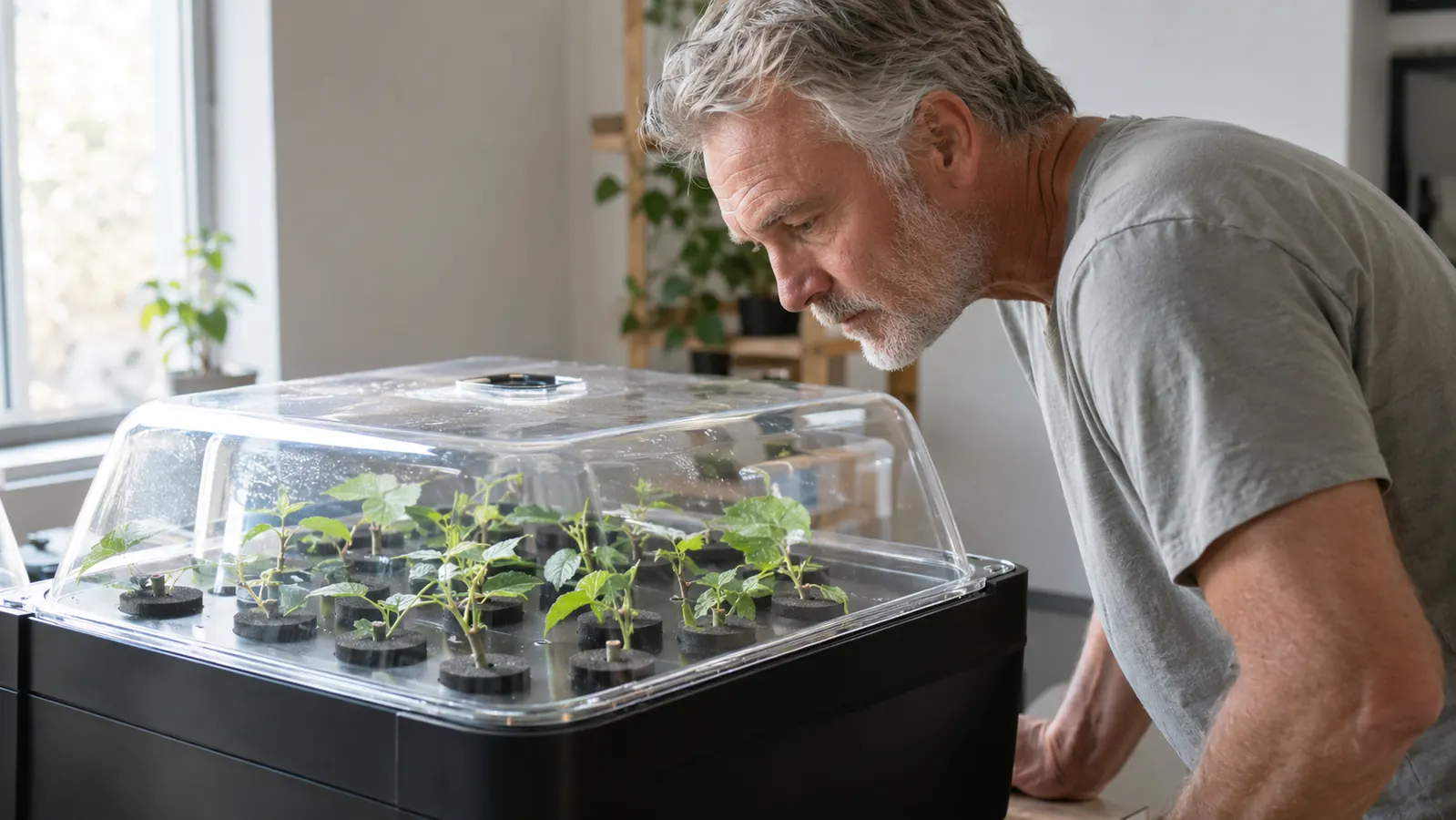
I bought the CLONE KING 25 Site Aeroponic Cloning Machine for one reason: my back. Four years ago I had to give up the raised beds out back, and I moved my growing into a spare bedroom upstairs. That worked fine for greens and herbs, but every time I wanted more basil or another round of lettuce, I was buying new plants. I told myself I would learn to take cuttings properly, the way the seed catalogs always make it look easy. My first attempts in cups of water and damp perlite were a slow, moldy disaster. So I did what I do with any piece of equipment I am not sure about. I read the reviews, I checked the numbers, and I ordered the CLONE KING. This is the honest review I was looking for before I spent the money.
The Quick Verdict
The CLONE KING does what it promises: cuttings root fast, the sprayers rarely clog, and the pump is quiet enough for a bedroom. It is not magic, it is not set-and-forget, and the included instructions assume you already know a few things. For a home grower who will check on plants daily, it is worth the money.
Amazon Check Today's Price →Tired of cuttings that rot before they root?
The CLONE KING 25 Site Aeroponic Cloning Machine keeps cuttings misted and oxygenated so they root in days, not weeks. See today's price on Amazon and read the current buyer reviews before you decide.
Amazon Check Today's Price on Amazon →How I Have Used It
I have run three full cycles through the CLONE KING since it arrived in late winter. The first was a tray of basil cuttings, 24 of them, because basil is what Linda demands and what I kill most reliably. The second was lettuce, and the third was a mixed run of mint and oregano. I kept my usual paper grow log the whole time: date cuttings were taken, date they went into the machine, water temperature, pH, how many rooted, how many I tossed.
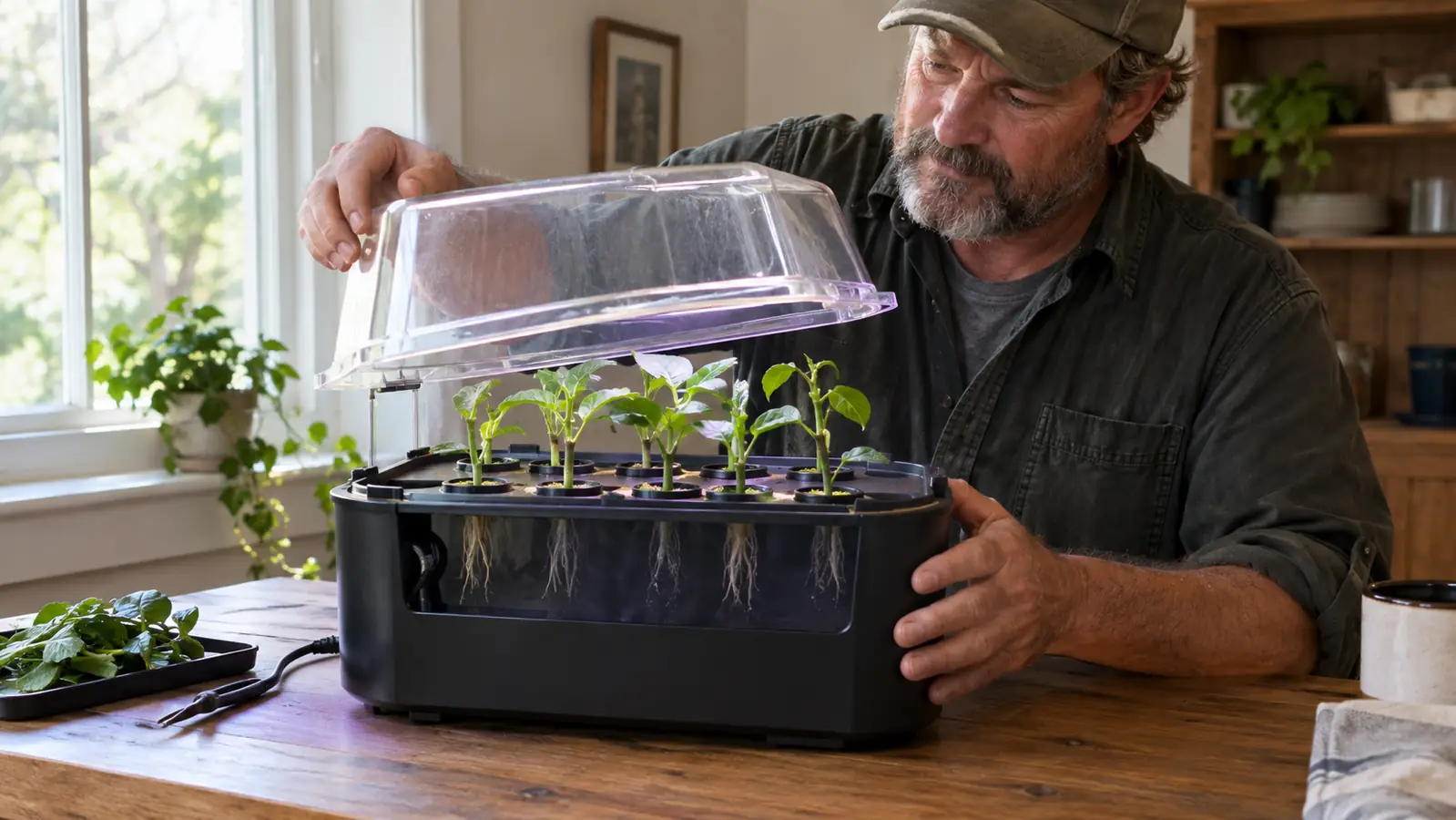
The machine itself is simple. A black reservoir sits on the table, a lid with 25 holes goes on top, and each hole holds a neoprene collar that grips the cutting. A small pump in the reservoir pushes water up through a manifold, and four sprayers on each side mist the stems. A timer runs the pump on a cycle, 30 seconds on and 30 seconds off out of the box. You set the cuttings, add water and nutrients, plug it in, and close the lid.
The first thing that surprised me was the noise. I expected a hum I would have to listen to all day. The pump is genuinely quiet, quieter than the little desktop fountain Linda used to keep in the living room. In a carpeted bedroom I can barely hear it from the hallway. That matters more than most reviews admit, because a cloning machine that sounds like a washing machine would have been back in its box by day two.
My first run taught me the hard way that the machine will not fix a bad cutting. I took 24 basil cuttings on a Tuesday afternoon in early March, trimmed the lower leaves, and dipped the stems in rooting gel before I set them in the collars. I kept the water temperature at 72 degrees and the pH around 5.8, and I checked the reservoir every morning. By day six I could see tiny white bumps on the stems. By day ten, roots long enough to transplant. That run gave me 22 rooted cuttings out of 24, and Linda had basil on the windowsill by the end of the month.
What Nobody Tells You Before You Buy
The marketing says to expect 100% success rates. I will tell you what my log says instead. Run one, basil: 22 of 24 rooted. Run two, lettuce: 19 of 24. Run three, mint and oregano: 21 of 24. That is 62 out of 72, about 86%, and I count that as a win because my old method in perlite was closer to 40%. The machine is good. It is not a guarantee, and anyone who tells you different is selling something.
The other thing nobody tells you is that the instructions are thin. The manual shows you how to assemble the pump and the sprayer manifold, and then it stops. It does not tell you how long to leave cuttings before you take them, what angle to cut the stem, or whether to use a rooting gel. I had to learn those from a gardening forum and from my own mistakes. If you are brand new to cuttings, budget an afternoon of reading before your first run.
The second run, lettuce, is the one that humbled me. I took the cuttings on a Friday and set the machine up in a hurry because we had company coming. I skipped the rooting gel, I did not check the pH, and I let the water level drop below the pump intake for most of a weekend. By Monday the stems were limp and the water smelled. I cleaned the whole machine, started over with fresh water, and still lost 5 of the 24. That failure was mine, not the machine's, but it taught me the routine that has worked ever since: check the water every morning, keep the pH in range, and never skip the gel.
The marketing says to expect 100% success rates. My log says 62 out of 72 rooted. That is still the best rooting I have ever gotten, but it is not a guarantee.
The Parts That Matter
The sprayers are the heart of the machine, and they are the part most likely to fail on cheaper units. After three runs and a few months of use, all eight of mine still spray evenly. I have not had a single clog, and I use plain city tap water that I let sit out overnight. I clean the machine between runs with a mild bleach solution and rinse it well, and so far that has been enough.
The neoprene collars are worth a word too. They come in two sizes, and the smaller ones grip thin stems like basil without crushing them. The larger ones handle sturdier cuttings. I lost a few collars down the sink drain the first time I cleaned the lid, so I ordered a spare pack. They are cheap, and you will want them.
The reservoir holds about two gallons, which sounds small until you realize the pump recirculates the same water. I top it off every couple of days and change it fully between runs. The water level window on the side is a small thing, but it saves me from lifting the lid to check, which matters when you are trying not to disturb fresh roots.
One detail I did not expect to care about: the clear lid. It lets me watch the mist work without opening anything. On the second run I caught a sprayer that had twisted sideways just by glancing at the lid from across the room. A thirty-second fix, and it probably saved that whole tray. If the lid were opaque, I would not have seen it until the cuttings started to droop.
What It Costs to Run
I am an HVAC man, so I measured the draw. The pump pulls about 9 watts, and the timer adds almost nothing. Running it 24 hours a day for a two-week cycle costs me less than a dollar in electricity. That is the kind of number I like, because it means I can leave it running without watching the meter.
The nutrients are the real ongoing cost. The CLONE KING does not come with a starter pack, and the manual does not recommend a specific brand. I use a general-purpose hydroponic nutrient at a quarter strength, plus a little rooting hormone in the water for the first few days. A bottle lasts me several runs, so the per-cycle cost is small. But it is a cost, and it is easy to forget when you are comparing machines by sticker price alone.
I also bought a cheap TDS meter and a bottle of pH adjuster after the lettuce run. The meter was about the same as a bag of potting soil, and it took the guesswork out of the water. I check the reservoir every other morning, and a full adjustment takes me about two minutes. If you already grow hydroponically, you probably own both. If you are starting from zero, add them to the budget before your first run.

The Honest Cons
The lid is the weakest part of the design. It is a single piece of plastic with 25 holes, and it flexes when you lift it with one hand. I have not cracked it, but I can see how someone in a hurry would. Lift with two hands and set it down gently, and it will be fine.
The included timer is basic. It has a fixed 30-second on, 30-second off cycle, and you cannot adjust it. For most cuttings that cycle is fine, and I have not felt the need to change it. But if you want to run a longer mist for thick woody stems, you will need to buy a separate cycle timer and wire it in yourself. That is a weekend project, not a dealbreaker.
The biggest con is the one I keep coming back to: the instructions. A first-time grower can absolutely use this machine, but they will not know it from the manual. They will learn by losing a few cuttings. That is how I learned, and I would have paid real money for a better guide.
There is also the cleaning. The machine is not hard to clean, but it is not quick either. Between runs I take the lid off, pull every collar, wipe down the reservoir, and run a bleach solution through the pump and sprayers for about twenty minutes. Then I rinse everything twice and let it air dry. That is a solid hour of work, and it is the part of the routine I look forward to least. Skip it and you will see it in the next run's success rate.
What I Liked
- Roots cuttings in about half the time of my old perlite method
- Quiet pump, fine for a bedroom or living space
- Sprayers have not clogged in three months of use
- Simple to clean between runs
- Cheap to run, under a dollar per two-week cycle
Where It Falls Short
- Instructions assume you already know how to take cuttings
- Lid flexes and needs two hands to lift safely
- Timer cycle is fixed, not adjustable
- No nutrients included, so budget for a bottle
- 100% success rate claim is marketing, not a promise
Who This Is For
This machine is for the home grower who checks their plants every day anyway. If you are the kind of person who looks at the basil before you make coffee, the CLONE KING will fit your routine. It is also for anyone who is tired of buying new plants every spring. One good mother plant can give you cuttings for years, and the machine turns that from a hope into a habit.
It is especially good for leafy herbs and greens. Basil, mint, oregano, lettuce, all of them rooted well for me. If you grow those indoors, this machine will pay for itself in what you stop spending at the garden center.
I would also point a beginner at it, with one warning. The machine makes the easy part easier, but you still have to learn the craft of taking a good cutting. Start with basil or mint, take more cuttings than you need, and expect to lose a few. The CLONE KING will forgive a lot, but it will not do the thinking for you.
Who Should Skip It
Skip it if you want a machine you can ignore for two weeks. Aeroponic cloning needs a daily glance, a weekly top-off, and a thorough cleaning between runs. If that sounds like work, stick with soil or a simple glass of water on the windowsill.
Skip it if you are growing from seed. This machine does not germinate seeds, it roots cuttings. If you do not have a mother plant to take cuttings from, you will need to buy one first. And skip it if you expect every single cutting to root. The CLONE KING is the best rooting method I have used, and even it lost 10 of my 72 cuttings.
Alternatives I Considered
I looked hard at the smaller 10-site machines before I bought the CLONE KING. They cost less and take up less table space, but the per-site price is worse and the smaller reservoir means more frequent top-offs. For a home grower who wants a steady supply of basil and lettuce, the 25-site size is the sweet spot. I also considered a simple DIY setup with a storage tote and a pond pump. It would have worked, but it would have taken me a weekend to build and I would have been troubleshooting it for a month. The CLONE KING was the faster path to my first rooted cutting.
I also thought about a second CLONE KING for the porch in the warmer months, but I am glad I did not buy one. One machine keeps the kitchen and the salad bowl supplied, and a second would just mean twice the cleaning. If I ever need more than 25 sites, I will take more cuttings in two batches a week apart instead of buying another machine.
Ready to stop buying plants every spring?
The CLONE KING 25 Site Aeroponic Cloning Machine is the quiet, reliable way to turn one good plant into a steady supply of cuttings. Check today's price on Amazon and see why home growers keep coming back to it.
Amazon Check Today's Price on Amazon →