
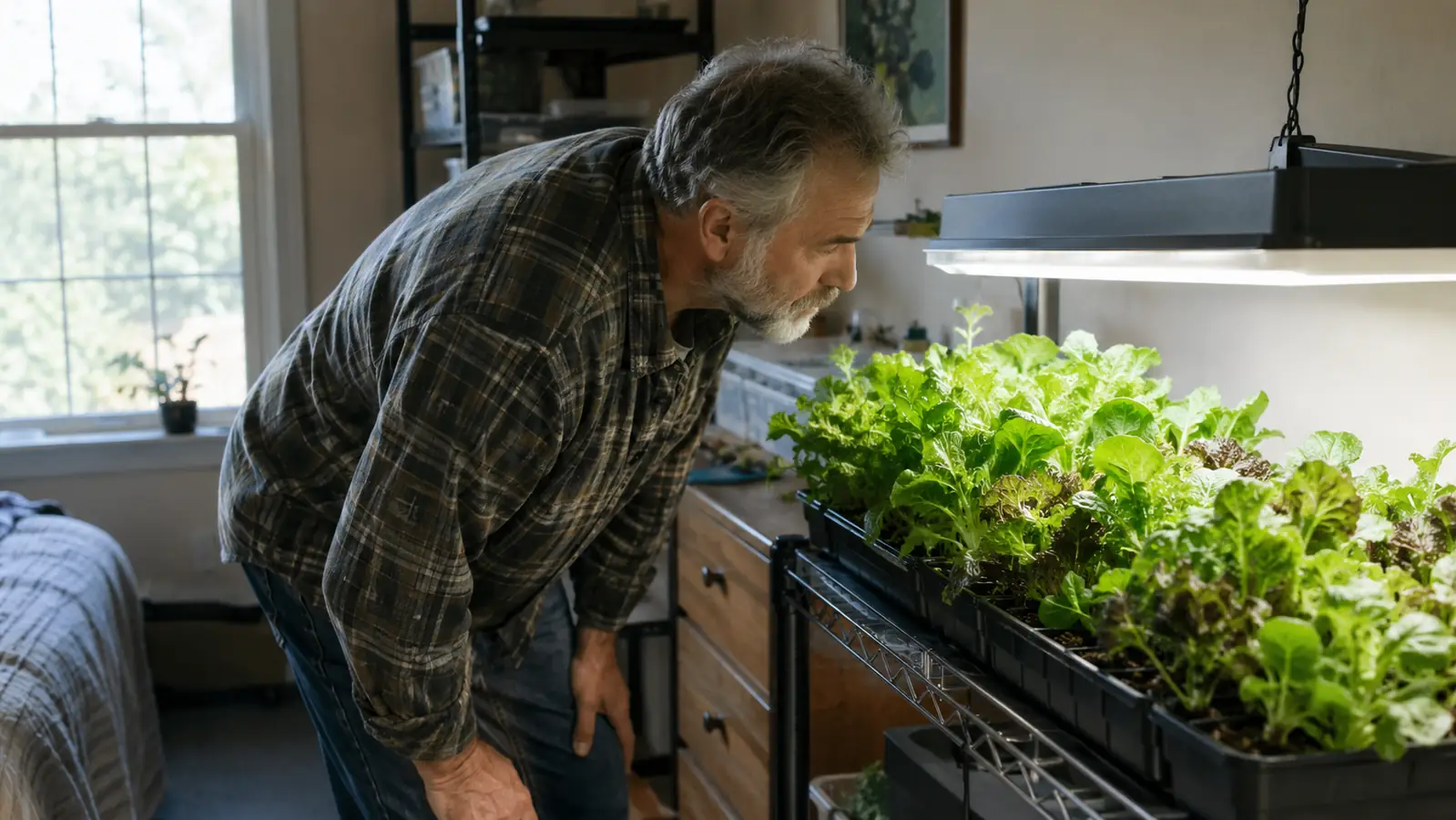
I started growing indoors about four years ago, after my back made bending over raised beds a losing game. I turned a spare bedroom upstairs into a grow space, and I kept a paper log from day one. The first thing that bit me was pH. In January of that first year I started a tray of romaine from seed, and by the third week the outer leaves were pale and the growth had stalled. I blamed the light, then the water, then the seed. It was none of those. The nutrient solution had drifted too far while I was busy worrying about everything else. That is when I bought the General Hydroponics pH Control Kit, and it is the reason I still grow anything at all. Here are ten reasons pH control matters for home growers, in the order I learned them.
Stop Guessing at Your Nutrient Solution
The General Hydroponics pH Control Kit gives you the drops, the test vial, and the two bottles of pH Up and pH Down you need to keep your greens in range. No meters to calibrate, no batteries to charge.
Amazon Check Today's Price on Amazon →It Turns an Invisible Problem Into a Number You Can Write Down
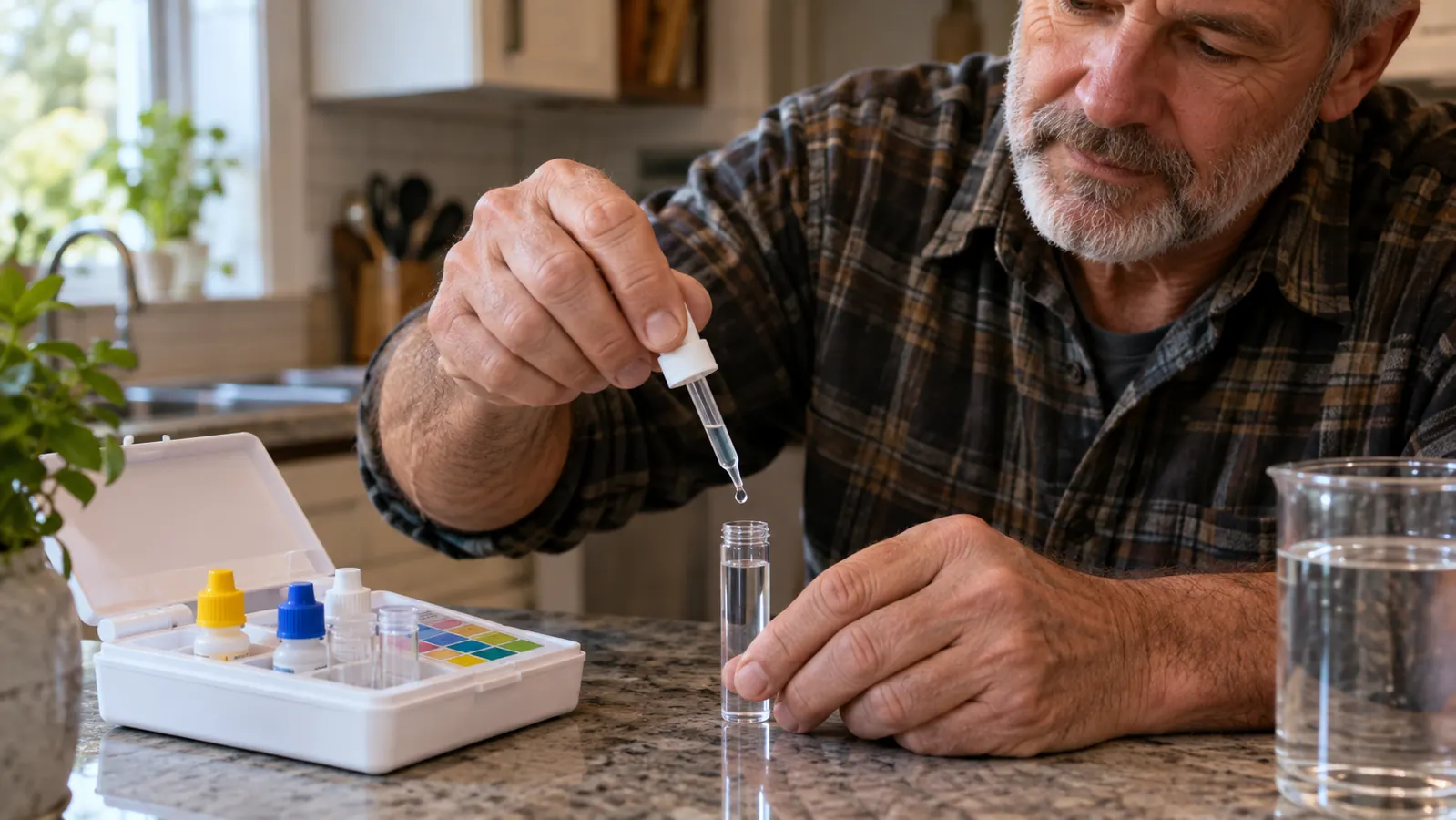
Plants do not tell you the pH is off until the damage is done. With the test kit, I take a sample, add three drops, and compare the color to the chart. The chart has a row of colors from yellow through green to blue, and matching is easy even under a cheap utility light. On a cloudy day the color can look off, so I hold the vial up to the window and check it against the chart before I write anything down. That number goes in my log. Once it is a number, it is a problem I can fix instead of a mystery I can only blame on bad luck.
It Stops Nutrient Lockout Before Your Leaves Go Pale
When the pH drifts out of range, the roots stop taking up what is in the water, no matter how much nutrient you add. In my log from March two years ago, I have a string of readings: 6.4, 6.8, 7.1, 7.4. I did not test for ten days because the leaves looked fine. By the end of that stretch the new leaves were pale and the roots looked brown. Two weeks later the plants still had not moved. A quick test would have caught it on day one. The kit is cheaper than one ruined batch of seedlings.
It Makes Your Nutrients Actually Work
Nutrients only dissolve and get taken up in a certain pH range. If you are feeding your plants and they still look hungry, the food is sitting there in the water, locked out. I have watched a tray of spinach go from deep green to yellow in a week while I kept adding nutrient, and the fix was not more food, it was two drops of pH Down. I check the pH before I add any nutrient, because if the solution is already out of range, the nutrient I pour in will just sit there. Keeping the solution in range means every drop of nutrient you mix is doing the job you paid for.
It Catches Problems Early, When They Are Still Cheap to Fix
A pH reading takes two minutes. Catching a drift at 6.8 is a few drops of pH Down. Catching it at 7.8 means flushing the whole system and waiting for the plants to recover. I flushed my reservoir once in the spring of my second year, and it took a whole afternoon and a bag of wasted nutrients. The difference between those two fixes is about an hour of work and a few cents of pH Down, versus a full afternoon and a bucket of mixed nutrient down the drain. The test is the early warning system that keeps a small problem small.
It Works With City Tap Water, Not Just Fancy RO Systems
I use Raleigh city tap water that I let sit out overnight before mixing nutrients. It starts alkaline and drifts around as the plants feed. My tap water comes out around 8.0, and after I mix nutrients it usually settles near 6.5 for a day or two, then climbs. I keep the pH Up and pH Down bottles right next to the reservoir. A few drops of pH Down in the morning brings a 7.2 reading back to 6.3 by the time I check again. You do not need a reverse osmosis system to grow good lettuce.

It Keeps Your Grow Log Honest
I write down the pH every time I mix a fresh batch and every time I top off the reservoir. After a few weeks, the log shows a pattern: my system drifts about 0.3 points every three days in winter, and a little faster in summer. That pattern tells me when to check, before the plants start complaining. I also write down the weather, because a cold snap changes how fast the reservoir drifts. I check the calendar more than the plants now, because the log tells me the drift is coming before the leaves do.
It Saves You From the Worst Kind of Gardening Mistake: Overcorrecting
Without a test, you are guessing. You add a little acid, then a little more, then suddenly the solution is too acidic and the plants are worse off. I did this with a tray of arugula once, chasing a reading I had not actually taken. With the kit, you know exactly where you started and exactly how much you added. The guesswork leaves the room.
It Is Simple Enough to Use Every Single Time
I am a retired HVAC technician. I like tools that work without a manual. The General Hydroponics kit is three bottles, a vial, and a color chart. No calibration, no storage solution, no batteries. That simplicity is the whole reason I actually use it instead of letting it gather dust. I keep the chart taped inside the cabinet door, so the whole test takes about two minutes from start to finish.
It Pays for Itself in One Season of Basil
Linda, my wife, mostly cares about the basil and the lettuce. A single tray of basil that makes it to harvest instead of dying from lockout is worth more than the kit cost. We use that basil on pasta about twice a week from April through October, and every plant that survives is a batch I do not have to replace. When you count the seedlings I do not have to buy again, the kit is the cheapest insurance in the grow room.
It Makes Indoor Growing Feel Like a Project You Can Finish
I treat growing like any other job: measure, record, adjust, repeat. The pH kit is what makes that possible. Last fall I filled a page with nine weeks of readings, and every plant that finished was worth the two minutes it cost. When the numbers are in range and the plants are dark green and growing, the whole system makes sense. That feeling is why I have kept at this for four years.
What I'd Skip
If you are growing in soil outdoors, you can probably skip the kit. Soil buffers pH swings better than water, and the rain does half the work. I would also skip it if you are not willing to test at least a couple of times a week. The kit only helps if you use it. And if you already own a good digital pH meter that you trust and calibrate on schedule, you do not need the drops. But for a home grower running a reservoir indoors, I have not found anything that does the job with less fuss. My one caution is to buy the kit before the trouble starts, not after you have already lost a tray. That lesson cost me a February of lettuce.
The kit is cheaper than one ruined batch of seedlings, and it turns a mystery into a number you can fix.
Start Your Grow Log With a Number You Can Trust
The General Hydroponics pH Control Kit is the first thing I recommend to anyone setting up a spare bedroom grow space. Test every batch, write it down, and adjust before the plants tell you something is wrong.
Amazon Check Today's Price on Amazon →