
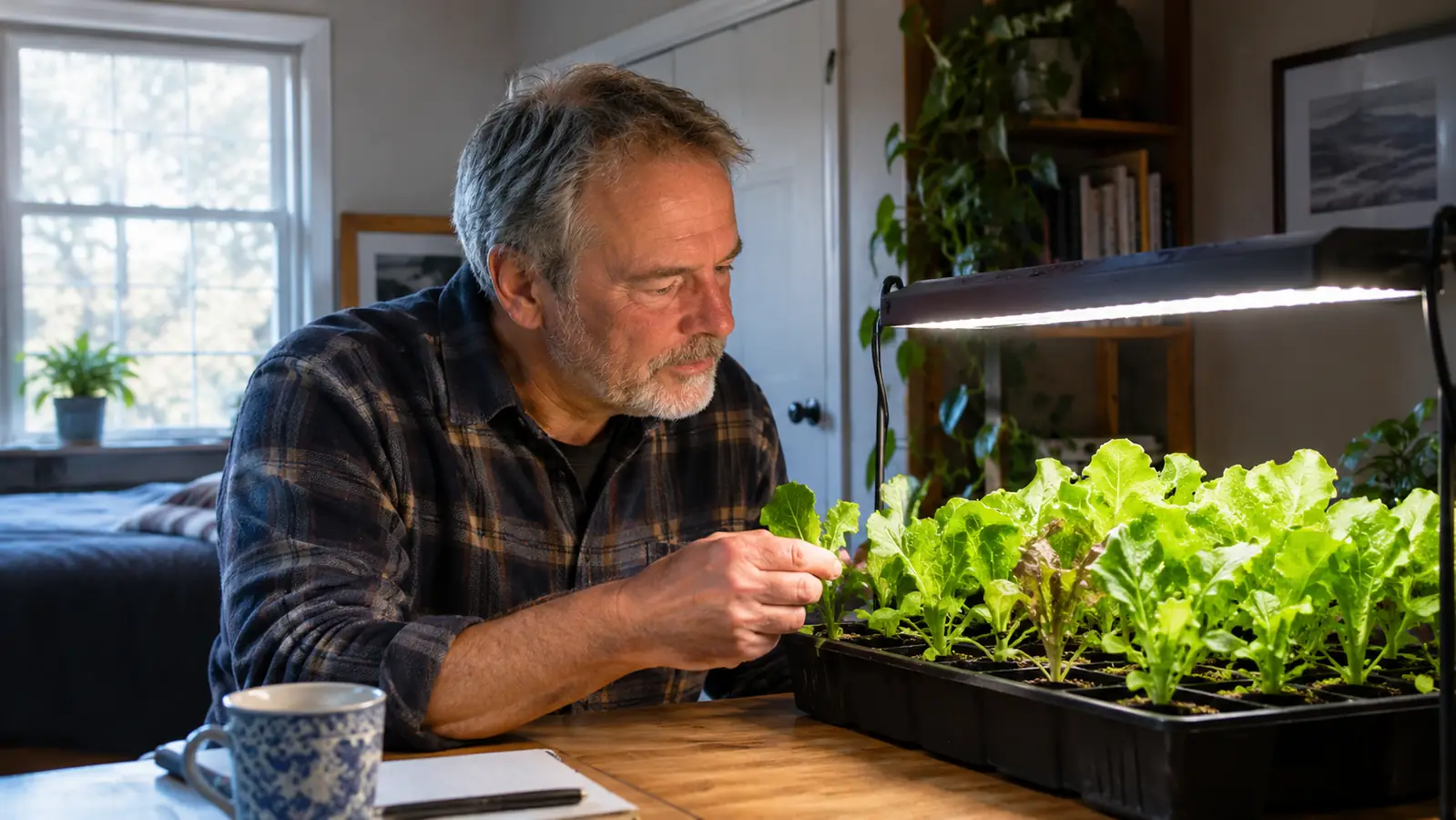
I did not set out to grow lettuce in my spare bedroom. Four years ago, a back problem made bending over the raised beds out back about as fun as a root canal, and Linda suggested I move a few pots indoors before I hurt myself again. So I cleared a table in the spare room, hung a grow light, and figured I would try a little basil and see what happened.
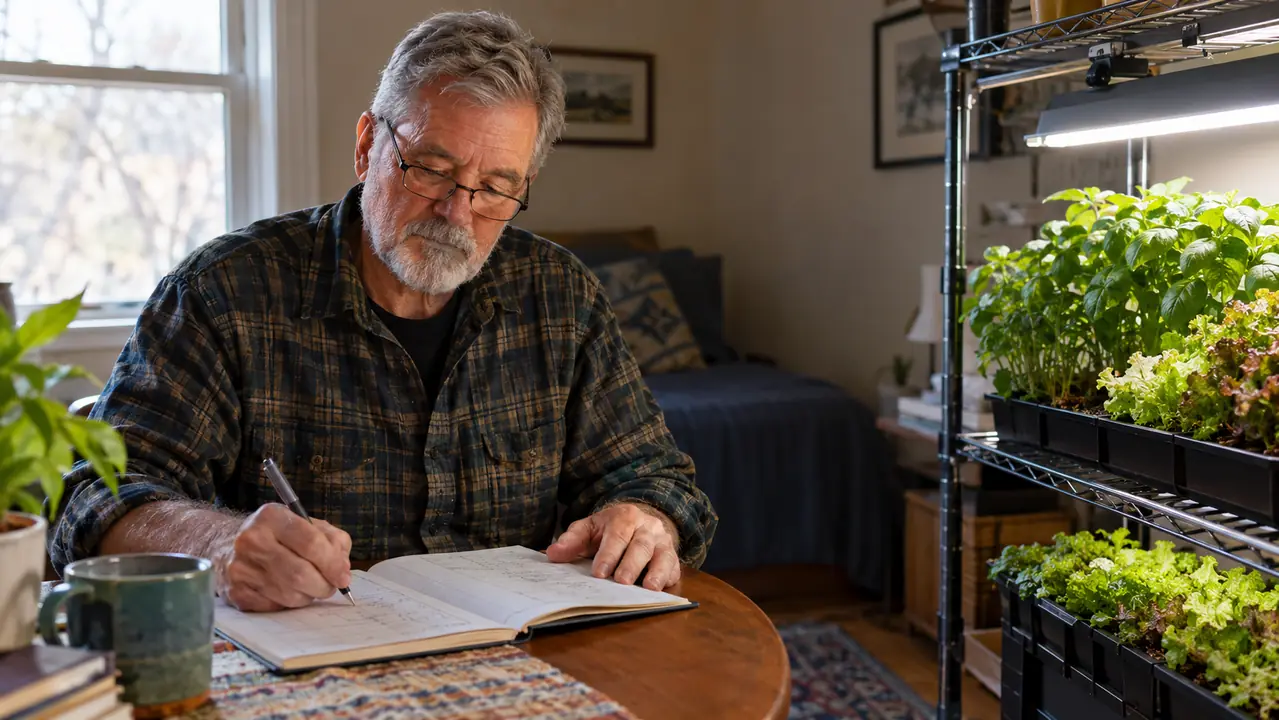
The first year went fine, if you count fine as everything alive but nothing thriving. The basil grew, the lettuce grew, but the leaves yellowed at the edges and some plants just stalled halfway to harvest. I am a measurer by trade. Thirty-five years in HVAC will do that. I keep a paper log, and I started writing down when I watered, how much nutrient I mixed, and what the plants looked like. What I did not check, at first, was the pH of the water. It took me the better part of a year to figure that out, and the General Hydroponics pH Control Kit is what finally made it click.
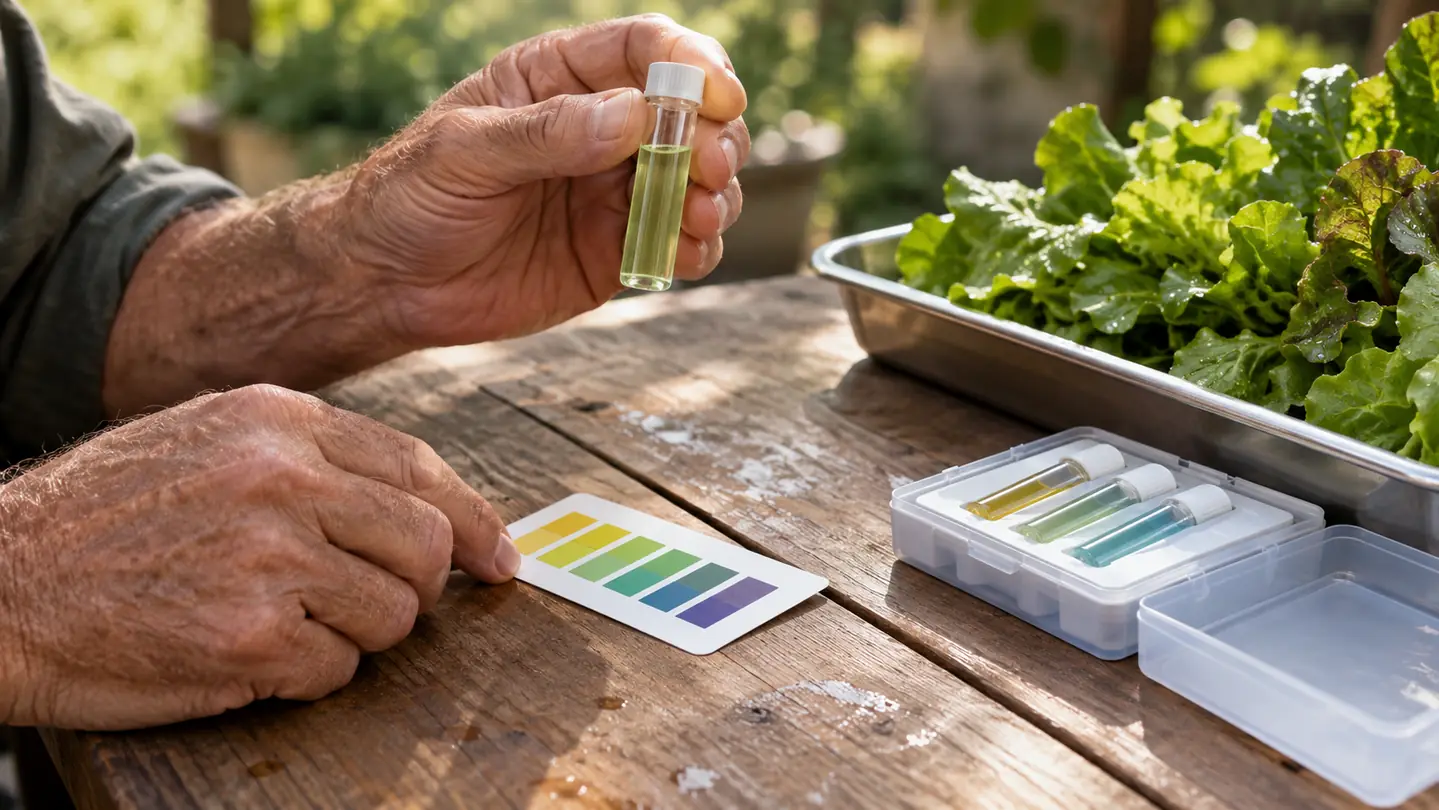
The kit is simple, which is exactly what a home grower needs. You get a bottle of pH Up, a bottle of pH Down, and a test kit with a vial and a bottle of indicator drops. No meter to calibrate, no batteries, no probe to store in a special solution. I am not saying a digital meter has no place in a grow room. I am saying that for one spare bedroom and a porch table, the drops have never once let me down.
The first thing I learned is that my tap water pH was not stable. One week it read high, two weeks later it read low, and my plants were paying for it. Once I started testing every other day and adjusting with a few drops of pH Down or pH Up, the changes showed up fast. The lettuce stopped looking tired. The basil got darker, and the leaves got bigger. My log shows the same week everything turned around, and I still go back to that page when I need to remind myself how simple the fix was.
The plants did not change that week. The water did. My log shows the difference.
If Your Plants Look Tired, Check the pH First
The General Hydroponics pH Control Kit is the tool I reach for every other morning. No calibration, no batteries, just a vial, a few drops, and a color chart. It is the simplest fix for the most common problem I see in home grow rooms.
Amazon Check Today's Price on Amazon →Now the routine is boring, which is how I like it. Every other morning I fill the little vial, add three drops of indicator, hold it up to the light, and compare the color to the chart. If it reads where I want it, I mix the nutrients and move on. If it is off, I adjust with a drop or two, test again, and wait ten minutes. That is the whole job, and it takes less time than making coffee.
I will tell you what I did wrong at first, so you do not have to. I chased the perfect number every single day. I adjusted, then adjusted the adjustment, and then I was standing there with two bottles in my hands and a plant that did not care. Plants have a range they are happy in, not a single point. For lettuce and herbs, staying anywhere in the right range beats being exactly right once. Pick a target, stay in the range, and leave the plants alone.
Linda does not care about pH. She cares that the basil is ready when she wants it and the salad does not come from a bag. That is the real test. The kit did not just fix yellow leaves. It made the whole room productive. We have had fresh greens through two winters now, and the spare bedroom smells like a garden instead of a furnace filter.
The kit also made the porch garden work. In the warmer months I move a tray of basil and lettuce out to the covered back porch, and the same water problems follow me out there. Warm weather makes tap water drift even faster. Same test, same two bottles, same ten minutes. The plants do not know it is a different room.
Here is what my log says, because I know that is what you would ask if we were standing in the room. Before the kit, I lost about a third of my lettuce starts to yellowing or stalling. After I started testing, that number dropped to almost nothing. I still lose a few, because that is how plants work. But I do not lose whole trays anymore, and that is the difference that matters.
What I'd Tell You If We Were Sitting at My Kitchen Table
Start with the water. Not the lights, not the nutrients, not the expensive fan. Test the water first. Let it sit out overnight, test it, adjust it, and keep a log, even if it is just a spiral notebook. You do not need a meter that costs a week of groceries. You need a bottle of drops, a bottle of pH Up, a bottle of pH Down, and the patience to check twice a week. That is the whole system. The General Hydroponics pH Control Kit is the one on my shelf, and it is the one I would hand you if you were sitting here. It will not make you a better gardener by itself. But it will take away the one variable that was quietly ruining your plants, and that is a good place to start.
Check Your pH Before You Change Anything Else
Two winters of steady greens out of one spare bedroom started with a single test kit. The General Hydroponics pH Control Kit has sat on my shelf since the week my lettuce turned around, and it is still the first thing I reach for.
Amazon Check Today's Price on Amazon →