
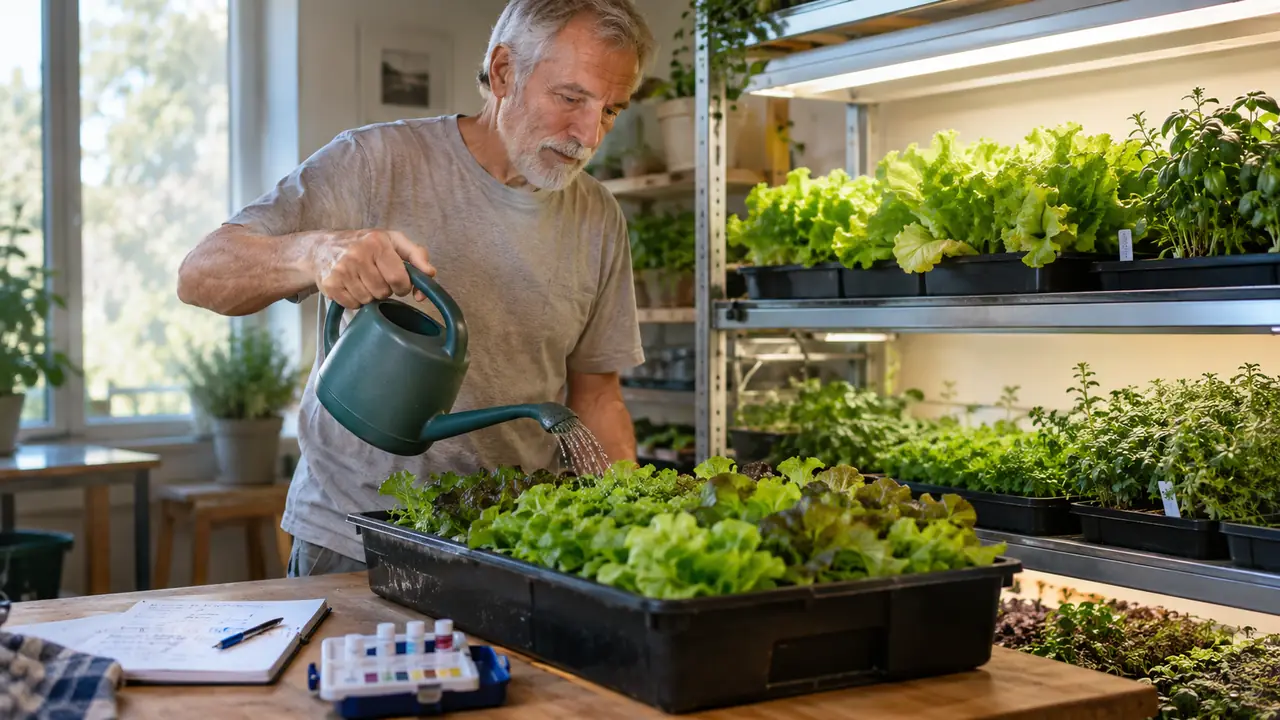
When I set up my first grow table in the spare bedroom upstairs, I figured a digital pH meter was the only serious way to check the water. I spent 37 years as an HVAC tech, I like instruments, and a little screen with numbers felt right. Then the probe dried out on me twice, and I lost a week chasing a reading that was off by a full point. Linda's basil went pale, my lettuce curled at the edges, and I finally got tired of my own stubbornness. I bought the General Hydroponics pH Control Kit as a backup, and four years later it is the tool I reach for most.
Short answer: if you test your nutrient mix once or twice a week, the General Hydroponics kit is the better tool. If you mix fresh nutrients every single day and want a number you can read without squinting at a chart, a digital meter earns its place. Most home growers I know, including me, do better with the drops.
Why pH Matters More in a Small Grow Room
In a small system, the water volume is tiny, so pH swings fast. A 5-gallon reservoir can move a full point in a day when the plants are drinking hard, and by the time the leaves tell you something is wrong, you have already lost a week of growth. In an aeroponic setup there is no soil to buffer anything, the mist hits the roots directly, so the number you mix is the number the plants get. Nutrients only get taken up in a narrow band, roughly 5.5 to 6.5 for most leafy greens, and outside that band the plants look hungry no matter how much food you add. I learned this the hard way with a tray of lettuce that stayed small and pale while I added more nutrient mix, convinced I was underfeeding it. The real problem was the pH, and the meter I trusted was lying to me.
The other reason pH matters indoors is that you are the only weather system in the room. Outdoors, rain and soil bacteria smooth things out. Indoors, what you mix is what the roots get, so a small mistake shows up fast. That is why I test before every nutrient change and why I write the number in my paper grow log. I have been keeping that log since the first week, and it has caught more problems than any single tool I own.
I test every time I mix a fresh batch, which for me is every five or six days. I pour the mix, let it settle for a few minutes, take a sample, and write the number in the log before the plants get anything. The ritual takes longer to describe than to do, and it means I catch a bad batch before the plants do.
How the Two Tools Work
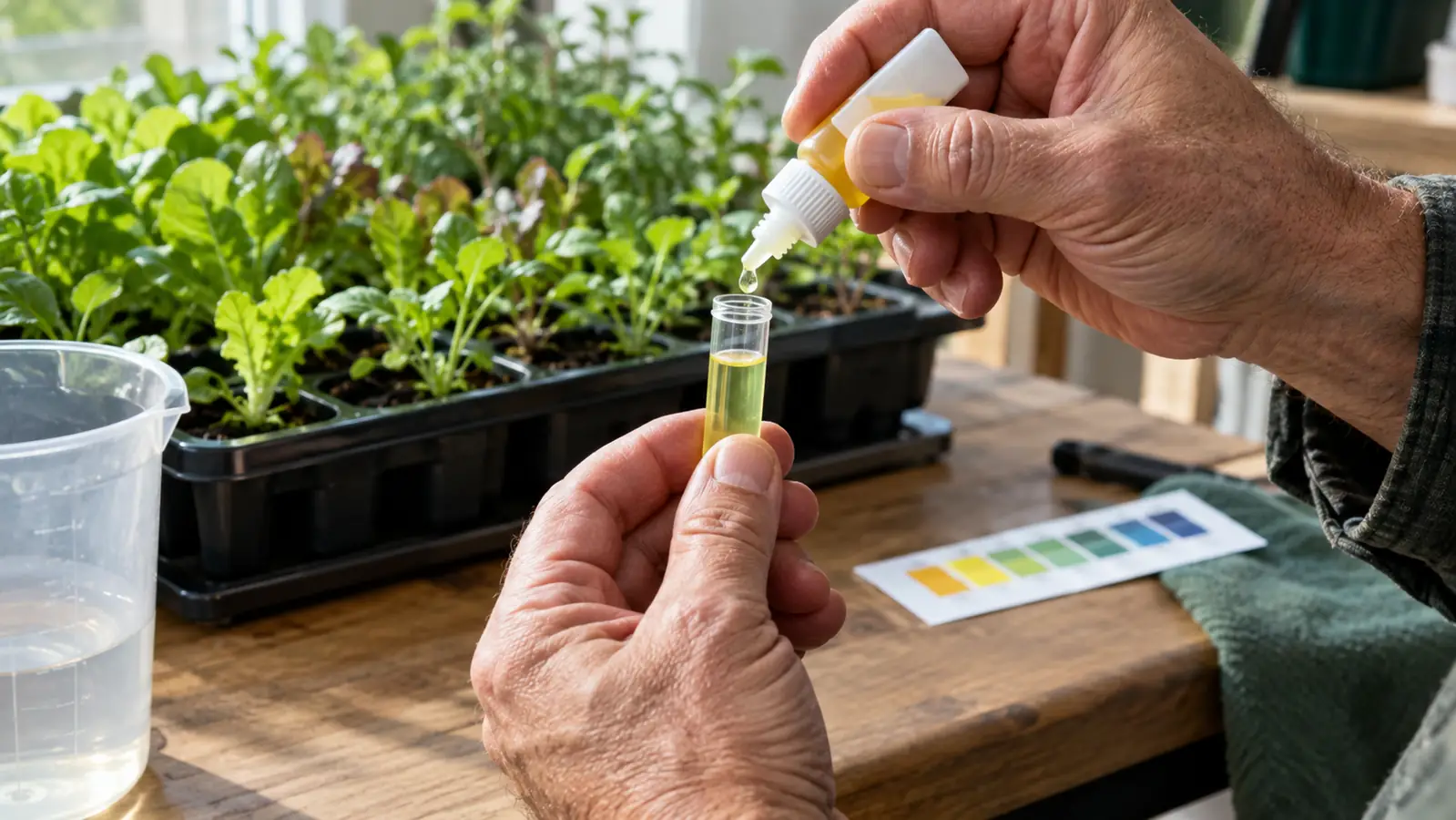
The General Hydroponics pH Control Kit is about as simple as testing gets. You fill the included vial with a small sample of your nutrient mix, add a few drops of the test solution, put the cap on, and shake it. The liquid changes color, and you match that color to the chart on the bottle. It gives you a range rather than a precise decimal, and for most plants that range is all you need.
A digital pH meter does the same job with a probe and a screen. You dip the tip into the sample, wait for the number to settle, and rinse it off. The catch is that the probe has to be kept wet, cleaned after use, and calibrated on a regular schedule with buffer solutions. None of that is hard. It is just a routine, and routines get skipped when life gets busy.
The calibration routine is the part people underestimate. A meter is only as good as its last calibration, and the buffer solutions have their own shelf life. None of this is complicated, but it is a second job, and when the plants look fine, it is the first job to get skipped. The drops do not ask anything of you between tests. That is the whole difference in one sentence.
What the Numbers Actually Mean
For leafy greens and herbs, the safe window is roughly 5.5 to 6.5. Lettuce does fine at the lower end, around 5.8, and basil prefers the middle, close to 6.2. When the pH drifts below 5.5, calcium and magnesium uptake drops, and you see it as brown spots and curled new leaves. Above 6.5, iron starts to lock out and the newest leaves turn pale while the veins stay dark. You do not need to memorize any of this. You just need to know that the window is narrow and that your test result tells you which side of it you are on.
| General Hydroponics pH Control Kit | Digital pH Meter | |
|---|---|---|
| Setup | Open the box, fill the vial, add drops, compare. No batteries, no calibration, no instructions longer than a postcard. | Soak the probe, calibrate with two buffer sachets, then take the first reading. |
| Reading precision | Color match lands you within a few tenths of a pH point, which is enough for nutrient uptake. | Digital readout to 0.01, and you can watch the number settle before writing it down. |
| Calibration | Nothing to calibrate. The drops come factory-mixed and stay stable for years. | Needs a two-point calibration every few weeks, plus buffer and storage solution on hand. |
| Daily effort | Fill a vial, add drops, shake, compare. About two minutes with good light. | Dip the probe, read the number, rinse, done. Faster when you test every day. |
| Failure mode | Drops do not drift. The chart can fade if you leave it in the sun, but the test liquid stays stable. | A probe can dry out or foul and read wrong while still looking convincing. |
| Best for | New growers, weekend testers, anyone who wants a check without owning more gear. | Daily testers who want an exact number and will keep up with the upkeep. |
The meter told me 6.4 for a week straight. The drops said 5.8. One of them was lying, and it was not the drops.
Where the General Hydroponics Kit Wins
The biggest thing the drops have going for them is that they cannot drift. A probe is an instrument with a memory. It gets fouled by nutrient salts, it dries out when you forget to cap it, and the day it starts reading high, you will adjust your nutrients to fix a problem that does not exist. That is exactly what happened to me. My tap water sits out for a day before I mix anything, and I spent a week chasing a pH of 6.4 that the drops finally told me was really 5.8. I had been slowly starving the lettuce while I trusted the screen.
The kit is also easier to use early in the morning. You do not need to find a bottle of storage solution or remember which buffer sachet is which. You fill the little vial, add the drops, shake it, and hold it up to the chart. Two minutes and you are done. I keep a paper grow log, and the drops fit the way I actually work. When Linda asks whether the basil is okay, I can show her the color in the vial and the line in my notebook.

Where the Digital pH Meter Wins
I am not going to tell you the meter has no place, because it does. If you mix nutrients every morning, a meter is faster and the reading is exact. The drops give you a range, and in low light you will second-guess yourself. A good digital meter takes the guesswork out. You dip it, wait for the number to stop moving, and write it down. That precision matters when you are adjusting a recipe and you need to know whether the last addition moved the pH by 0.1 or 0.3.
The meter also earns its keep if your water source changes over the year. City water goes through different treatment through the seasons, and a meter catches small shifts before your plants do. A friend of mine grows on his covered porch and tests every day because his water comes from a well, and for him the meter is the right call. I borrowed his once and liked the number on the screen. I just did not like having to remember to keep the probe wet and clean it after every use.
The Kit That Ended a Week of Bad Readings
If you test once or twice a week, the General Hydroponics pH Control Kit is the tool I would hand you first. It takes two minutes, it never drifts, and mine is still going four years later.
Amazon Check Today's Price on Amazon →Who Should Buy Which
Buy the General Hydroponics pH Control Kit if you are new to growing, if you test a few times a week, or if you know you will not calibrate a probe on schedule. That is most people, and it is certainly me. Buy a digital meter if you mix nutrients every day, if your water source changes often, or if you already own a meter and you keep up with the maintenance. Both tools will tell you the pH. The difference is which one you will actually use on a Tuesday morning.
One more thing. If you already own a meter and it is working, there is no reason to switch. The kit is the better buy for someone starting out or someone who has fought with a drifting probe. It is not a competition. It is about matching the tool to the habit you can actually keep.
What I Would Do Differently
If I was starting over, I would buy the General Hydroponics pH Control Kit first and skip the meter until I hit a problem I could not solve with drops. That is the honest version of this comparison. The meter is a fine tool, but it solved a problem I did not have yet, and it added a maintenance chore I did not want. Four years in, the drops are still what I trust.
I would also buy a spare test vial and a proper notebook before I bought any upgrade. A spare vial means you can test your tap water and your fresh mix side by side, which is the fastest way to learn what your water is doing. And the notebook is the real tool. The numbers you write down teach you more than any single reading, because a trend tells you what a snapshot cannot.
A Few Practical Notes from Four Years of Testing
Whichever tool you pick, test your tap water before you mix anything. My city water sits out for a day before I use it, and the pH still shifts a little from season to season. Knowing the starting number makes the rest of the test meaningful. I also rinse the vial with plain water right after I use it, because nutrient residue will throw off the next reading. That takes ten seconds and it keeps the kit honest.
I also keep the chart out of direct light. The colors on the card are the only part of the kit that can fade, and a faded chart is worse than no chart because it will read high. And if you are the kind of person who likes a second opinion, the easiest way to get one is not a second meter. It is having someone else read the vial. Linda and I have disagreed over a color exactly once, and I was wrong.
One more note. Temperature affects pH readings, so try to test at the same point in your routine every time. I test right after mixing, before the lights have been on long, and I write the time next to the number. It sounds fussy, but it makes the log honest from one week to the next.
Stop Guessing, Start Testing
Four years after I bought mine, the General Hydroponics pH Control Kit is still on my shelf and still the first thing I reach for when I mix nutrients. If your lettuce is curling and your basil is pale, check the pH before you change anything else.
Amazon Check Today's Price on Amazon →