

The first time I checked the pH of my nutrient solution, I did not believe the color. I had mixed everything exactly like the label said, let the city water sit out overnight the way I always do, and the test still came back looking like weak tea instead of the green the chart promised. I remixed the whole batch, same result. That was three years ago, and it is the reason I bought the General Hydroponics pH Control Kit in the first place. I figured if I was going to grow indoors year round, I needed to see the answer with my own eyes before I trusted it, and I needed a tool that would not quit on me in month six.
My name is Gary Mercer. I am 61, a retired HVAC technician, and I grow greens and herbs in a converted spare bedroom upstairs, with a covered back porch pressed into service during the warmer months. My wife Linda cares mostly about the basil and the lettuce, which means I am the one who keeps the paper grow log I started four years ago. This is my long-term review of the pH kit that has been on my shelf since those first muddy readings, what it has survived, and what it is like to live with it after more than a year of daily checks.
The Quick Verdict
The most dependable part of my whole grow setup. The test indicator is the heart of the kit, and the bottles of pH Up and pH Down have carried me through two full seasons of lettuce and basil without running dry. It is not flashy. It just works, every single day.
Amazon Check Today's Price →A pH kit that earns its shelf space
After more than a year of checking my reservoir every morning, this is the kit I still reach for first. It reads true, the bottles last, and it took the guesswork out of the one thing that used to ruin whole batches of greens for me.
Amazon Check Today's Price on Amazon →How I've Used It
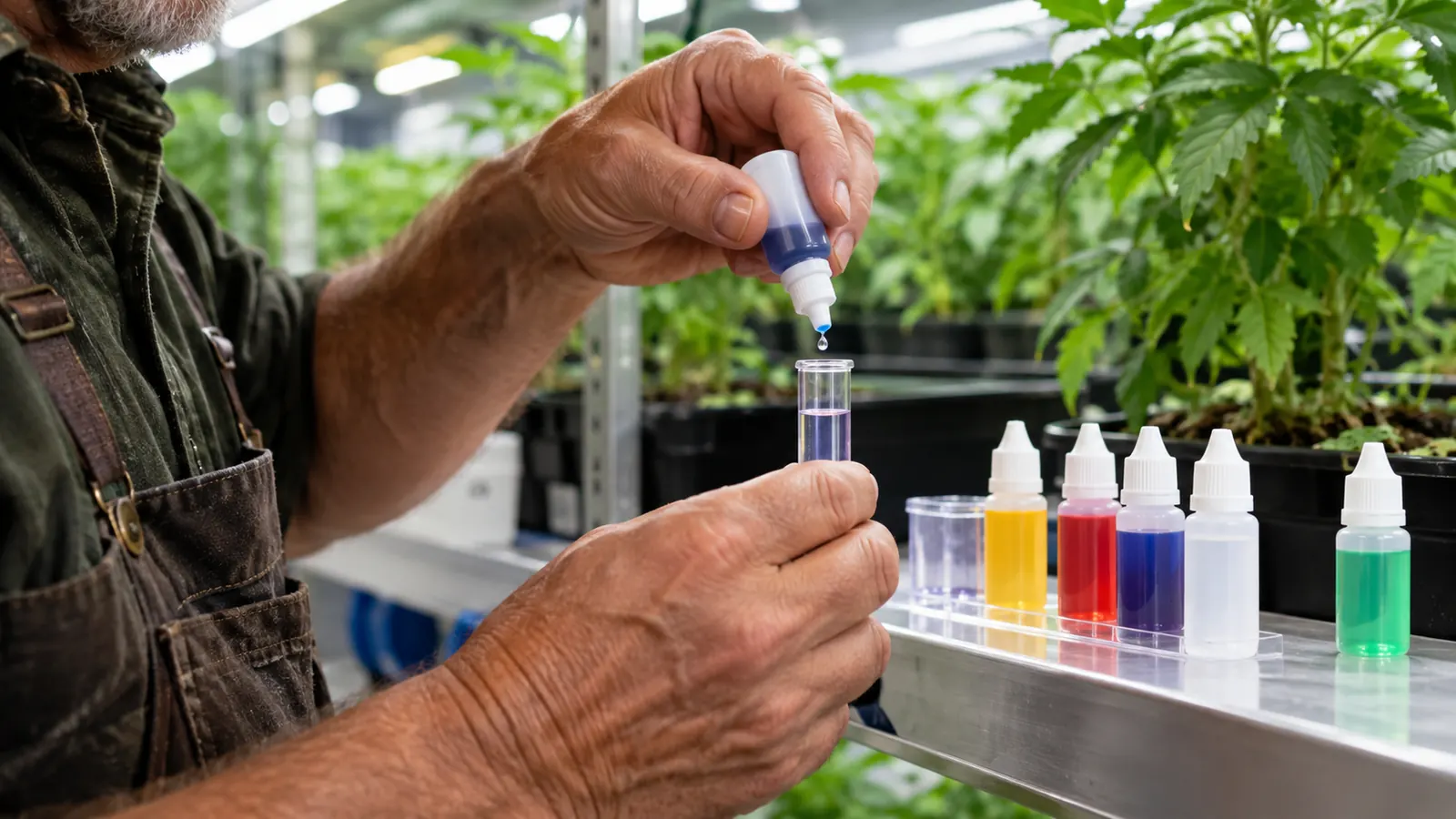
My routine has been the same since the beginning. Every morning I pull a small sample from the reservoir into a clean vial, add three drops of the test indicator, and hold it up against the color chart printed on the bottle. If the liquid matches the green band, I log the number in my grow log and go about my day. If it leans toward yellow, which means the solution has drifted acidic, I add a few drops of pH Up, swirl, wait ten minutes, and test again. The whole check takes about three minutes.
That sounds simple, and it is, but the habit matters more than the tool. pH drift is the quiet killer of indoor grows. I lost a whole tray of lettuce in my first year because I never checked anything, and the nutrient solution had gone sour while I was busy admiring the leaves. I covered the reasons pH control matters for hydroponics in a separate article on this site, but the short version is that every nutrient your plants need only crosses the root membrane inside a narrow pH band. Since I started testing every morning, I have not lost a single batch to pH. That is not because the kit is magic. It is because the kit makes checking easy enough that I actually do it.
One correction I remember clearly happened last February. The lettuce had been growing fine all winter, then the leaves started looking tired and the newest growth came in pale. My log showed three mornings in a row where the reading sat right on the yellow edge of the chart. I added four drops of pH Up, one at a time, retesting between each, and within two days the new growth was dark green again. That is what this kit does best: it catches a slow problem before it becomes a lost batch.
Linda rolls her eyes at the notebook, but the log is the reason I can tell you how this kit behaves over time. I have entries for every day I have grown, including the pH reading, how many drops it took to correct, and what the plants looked like a week later. Two seasons of that adds up to a lot of data, and it is the data this review is built on. When I say the kit holds up, I am not guessing. I am reading my own notes back.
What's Actually in the Kit
The General Hydroponics pH Control Kit is three pieces. A bottle of pH Up, a bottle of pH Down, and a small dropper bottle of test indicator with a color chart printed on the label. That is the whole thing, and that is the point. There are no probes, no batteries, no calibration solution, nothing that can stop working because you left it sitting in a drawer for three months. Every part of it is meant to be used up and replaced, and every part of it is cheap to replace.
pH Up is a potassium hydroxide solution, and pH Down is a phosphoric acid solution. They do exactly what their names say: one raises pH, one lowers it. You use them in drops, not cups. The test indicator is a bromothymol blue solution, the same kind of dye chemistry labs have used for decades. A few drops in a sample turns the water a color, and the color tells you where the pH sits. Yellow means acidic, green means neutral, blue means alkaline.
The smart part of the kit is that the indicator is the thing that does the measuring, and the indicator cannot drift. It does not need calibration because it is not a sensor. It is a chemical that reacts the same way every time. That is why I trust a color change I can see with my own eyes more than I ever trusted a cheap digital probe.
How the Readings Hold Up Over Time
The question I get most from people who have never used one of these kits is whether the color chart stays accurate after the bottle has been open for a year. In my experience, yes. I have compared my kit against a friend's digital pH meter twice, once after six months and once after a year, and both times the color reading agreed with the meter within what I could judge by eye. A tenth of a point, maybe two tenths on a bad light day. For growing greens and herbs, that is close enough.
The bottles last far longer than I expected. I use three drops of indicator per test, once a day, and after two full seasons the indicator bottle is still about a third full. The pH Up and pH Down last even longer because most days I do not need any correction at all. I have gone whole weeks where the reading was green every morning and I did not touch either bottle. That is the best outcome a pH kit can have, and it is the one I get most often.
The one thing that does wear out is the printed chart if you rub at it with wet fingers. I learned that the hard way, and now I keep the kit on a shelf with a drip tray under it and I wipe the bottle dry before I put it away. Treated that way, the label stays readable. Mine is still legible after a year of daily use, which tells me the kit was built to be used, not displayed.
Where It Gets Tricky
I would be lying if I said the kit is foolproof. Reading colors by eye is a learned skill, and the yellow-green boundary is genuinely hard to call under the LEDs I use in my grow room. I have learned to hold the vial up to a north-facing window or put a white index card behind it before I decide. In bad light, I have called a reading neutral when it was actually drifting, and the plants told me about it a week later. The leaves yellow, the growth stalls, and the notebook shows a reading I now know I misread.
The other trap is overshooting. The bottles come out fast if you squeeze, and two drops too many of pH Down will swing you right past neutral into acidic. I add one drop at a time, wait, and retest. It is slower, but it is the difference between a correction and a fight. The concentrated solutions are also hard on things they touch. A drop of the indicator on a white counter will stain it, and pH Down is an acid, so I wear gloves when I handle the bottles and I keep them on a high shelf where nothing gets knocked over.
None of these are reasons to avoid the kit. They are reasons to treat it like what it is: a simple tool that rewards a little care. The same is true of a digital meter, which needs its probe kept wet and its calibration checked. Every method has a chore attached. The chore here is learning to trust your eye, and it takes about a week of daily checks before the colors start to look obvious instead of arguable.
How It Held Up Moving Between Seasons
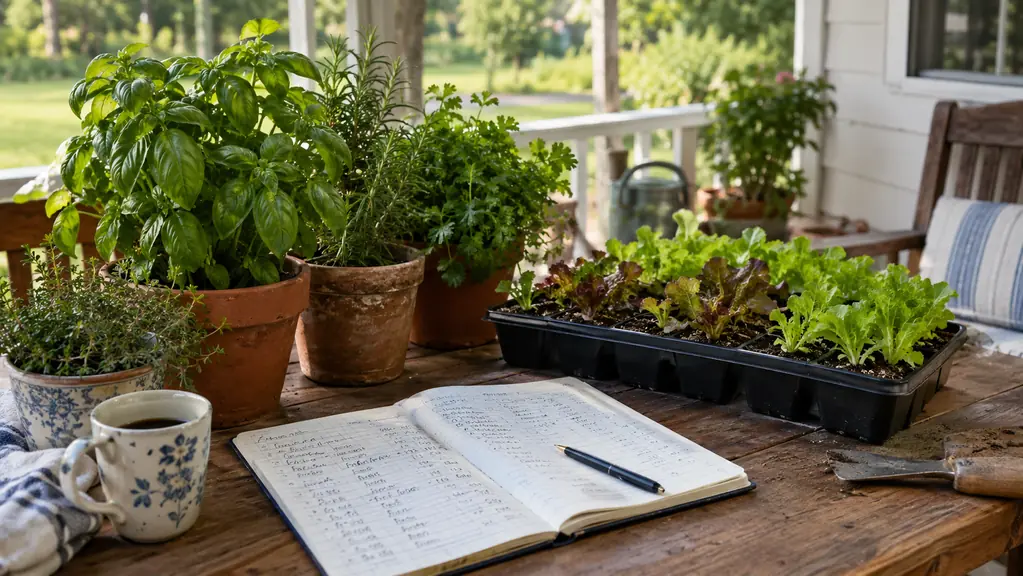
One thing I did not expect was how much my pH readings changed when I moved the grow from the spare bedroom to the covered back porch in the spring. Warmer air and more sun make the plants drink faster, which makes the nutrient solution concentrate, which makes the pH drift. My readings that had sat green all winter started creeping toward yellow every few days. The kit handled it exactly the way it handled everything else: the indicator showed me the drift, and a few drops of pH Up brought it back.
That is the thing a long-term review is supposed to tell you. The kit did not just survive the easy months. It survived the transition months, when every other part of my setup needed fiddling with, and it kept giving me the same honest answer it always had. I logged every correction, and by the end of the summer I knew exactly how many drops my system needed on a hot week. That kind of knowledge is the real product here.
Alternatives I Considered
I nearly bought a digital pH meter instead of the General Hydroponics kit. It would have given me a number on a screen, which sounded like an upgrade. Then a friend lent me his, and I ran it side by side with the kit for a week. The meter agreed with the color chart every single time, within what my eye could judge, and the meter needed calibration before I could trust it, storage solution to keep the probe wet, and batteries. The kit needed a window and three drops. There is a full comparison of this kit against a digital meter on this site if you are deciding between the two, because it really comes down to how you like to work.
I also tried test strips once, years ago, and found them harder to read than the dropper bottle, with a shorter shelf life to boot. For my money, the dropper kit sits in a sweet spot. It is more precise than strips and far less fuss than a meter, and the cost makes the decision easy. If a meter ever earns its place on my shelf, it will be because my grow got bigger, not because this kit let me down.
What I Liked
- The test indicator is dead simple and never needs calibration
- Bottles last through two full seasons at a few drops a day
- The color chart is easy to read in daylight
- pH Up and pH Down correct drift fast when you add them one drop at a time
- No batteries, no probes, nothing to break or store wet
Where It Falls Short
- Reading the color by eye takes practice in artificial light
- Easy to overshoot the target if you squeeze out too many drops
- The indicator will stain fabric and counters
- No case or tray included, so supply your own drip tray
Two seasons of lettuce and basil, and the bottle of test indicator is still a third full. That is the whole argument for this kit right there.
Who This Is For
The General Hydroponics pH Control Kit is for the home grower with a small reservoir or a few pots who checks things a couple of times a week and wants to see the answer with their own eyes. It is for the person who is tired of guessing why their lettuce bolts or their basil yellows, and who wants a tool that cannot quit on them. It is also for the beginner who is already overwhelmed by pumps and nutrients and lights, because the pH kit is the one part of the setup that does not need a manual. You learn it in ten minutes, and you trust it for years.
Who Should Skip It
Skip it if you run a big system and check pH every single day, because at that point a digital meter saves you time and gives you a number you can log precisely. Skip it if you know yourself well enough to admit you will not enjoy judging colors, because that is the whole job here. And skip it if you want a set-and-forget solution, because no pH tool is that. Every one of them asks something of you. This one just asks the least.
Still the first thing I reach for
If you are starting out, or if you have been fighting pH drift by guesswork, this kit takes the guessing out of it. That is what it did for me, and the notebook proves it. The longer story of how I ended up growing indoors is in a separate article on this site, but the short version is this: the pH kit is the reason my greens stopped dying.
Amazon Check Today's Price on Amazon →